


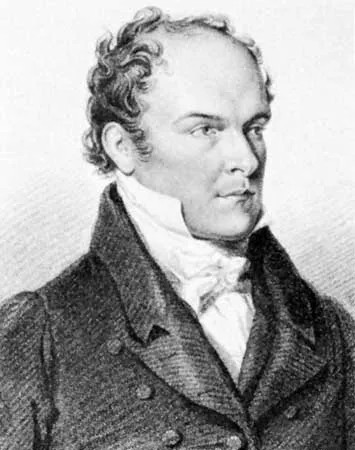
Thomas Nuttall was not born in the American wilderness. In 1808, at the age of 22, he escaped from the printing press and left for America, arriving in the wilds of the New World. He was born in 1786 in Long Preston, Yorkshire, and as a child worked as a printer for his uncle in Blackburn, Lancashire. It was a stable life. But this is not scientific.
When Nuttall crossed the Atlantic, his view of nature had changed. He settled in Philadelphia, the center of early American science. There he met the famous botanist Benjamin S. Barton. Patton didn’t just shake hands. He gave guidance. He taught Nuttall the general principles of botany and encouraged his lifelong obsession. Nuttall spent his time studying, writing sketches and observations in his notebooks. The preparations were very thorough this time as well. This allowed him to get on the road.
Exploring the Frontier for Plant Species
Nuttall did not stay in the city. He went to the border. He made many trips to North Carolina, Virginia, Missouri and Arkansas. The goal was simple, but ambitious. His goal was to collect and identify plant species that had never before been properly classified by European science. These expeditions were very difficult. The terrain is rough and rugged. The weather is unpredictable. However, the information he brought was valuable.
This field trip formed the backbone of his most important early contribution to science, The Genera of North American Plants. Published in 1818, this work organized the chaotic diversity of American flora into a coherent system. This is more than just a list. This is the frame. This book remains an important reference point for those studying the Botanical Discoveries of Thomas Nuttall. This forms a bridge between European taxonomic traditions and the unique biodiversity of North America.
From plants to birds
In 1822, Nuttall’s career changed. He moved from the field to the classroom and became a lecturer in natural history at Harvard University. Here his interests changed. He initially focused on plants, but he began to delve into the study of birds. Studying birds offers new ways of behaving and observing.
The result was Manual of the Ornithology of the United States and of Canada. The first volume was published in 1832. Its design differed from the typical large and expensive folios of the time. Nuttall’s goal was to create pieces that were affordable in size and price. He wanted accessibility. The book was a success. Additional editions of this book were published in 1840, 1891, 1896, and 1903. This book became a standard introduction to the study of American birds for generations.
The Final Journey
Nuttall’s tenure at Harvard was not permanent. He quit his job to join the expedition. The trip was ambitious and took him to the Columbia River and eventually to Hawaii. In Hawaii, he pursued his two passions: collecting plants and documenting nature. Even after years of academic teaching, he remains a field researcher.
In 1842 he returned to England. The contrast should be clear. He left vast areas uncharted.

