Stop. Think back to the last time you tried to log into a website.
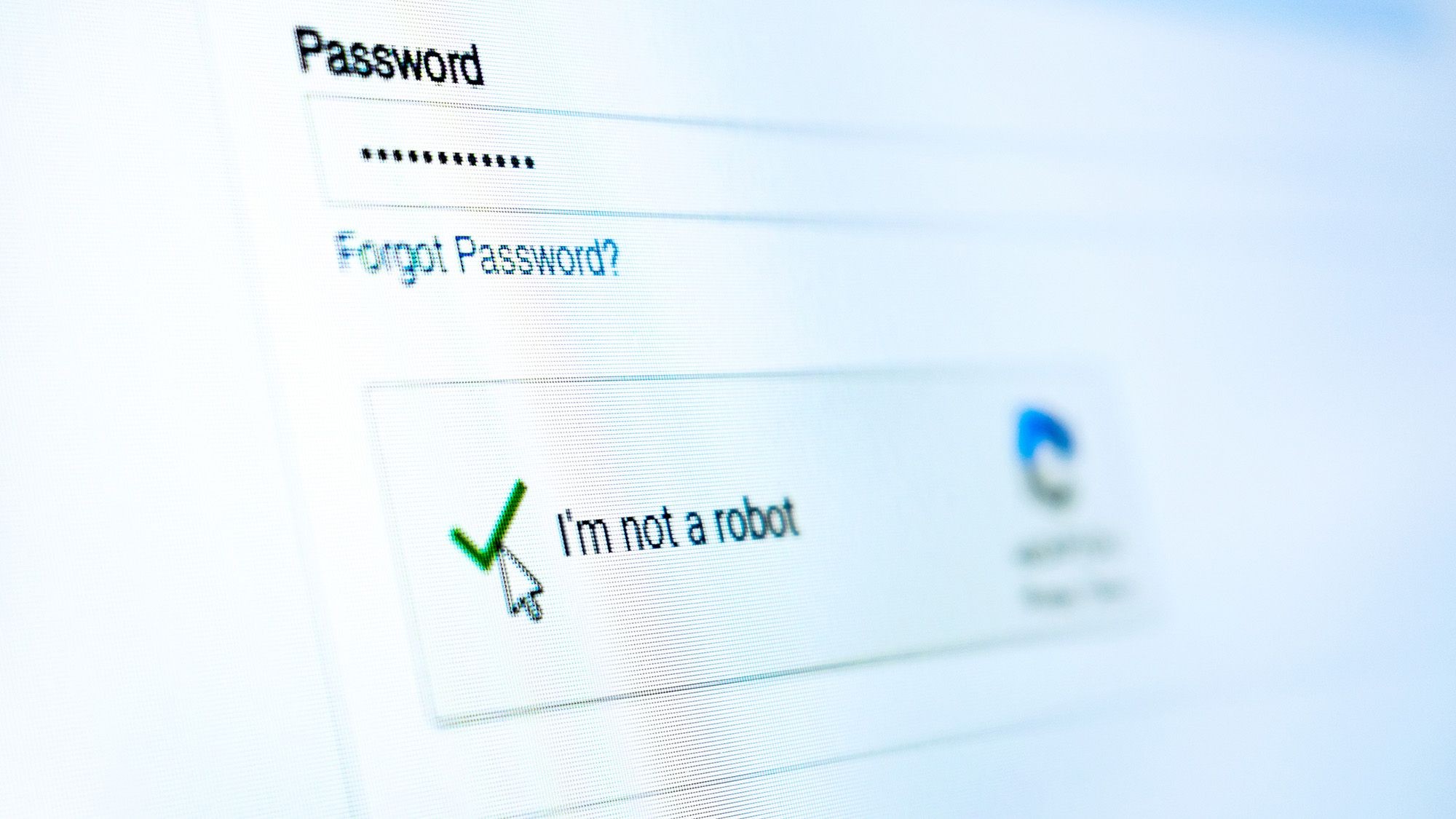
Did you click that checkbox? The one that says I am not a robot? Did you actually feel like a robot while you clicked it?
Maybe you didn’t have to click anything at all. Maybe the code just looked at your mouse jitter, your IP history, your cookies, and let you slide in because it guessed you were real. But sometimes the grid appears. Grainy squares. Traffic lights. Crosswalks. Motorcycles.
Identify them. Do it now. Or you are banned.
CAPTCHA stands for Completely Automated Public Turing Test to Tell Computers and Humans Apart. A mouthful. The name implies a simple promise. These tasks are easy for humans. Hard for bots. Therefore, spam stops. Account takeovers stop. The site stays safe.
It worked once. In the late 90s. Back when reading distorted text was a puzzle machines couldn’t crack.
Andreas Plesner at ETH Zurich called it a simple problem wrapped in a difficult shell. If I can’t touch you. If I have no physical interaction with the other party. Is it a person? Or code?
Early versions relied on warped words. Text-recognition software was clumsy then. It tripped over curvature and noise. So we added more curvature. We made it worse.
Then Google bought the tech. Around 2009 or so. The test shifted. From text to images. reCAPTCHA dropped Street View tiles. Identify the stop signs. Identify the bicycles.
Ng Chong, who leads IT at the United Nations University in Tokyo, put it plainly.
“The bet was that recognizing objects in messy real-world photos was a uniquely human skill”
It was a good bet. At the time. Humans are good at spotting things in noise. Bots were not.
But then came reCAPTCHA v2. The checkbox era. A layer of behavioral analysis sits underneath the image puzzle. It watches how you move. The speed. The hover time. The click velocity. It judges your humanity before asking you to spot a traffic light. If you look suspicious. The grid pops up.
Suspicion is subjective. So they automated it.
Then the AI woke up.
Low-cost deep learning models cracked the 70 percent success rate barrier way back in 2016. Just six years ago. A laptop could do what a human could.
By 2024 Plesner’s team built an AI model. It solved reCAPTCHA puzzles correctly. Every time. One hundred percent accuracy.
And Chong? He built a tool in early 2026 that mimicked human browsing patterns so well it bypassed the image grid entirely. Sometimes the checkbox stayed empty. No puzzle needed. Just fake behavior. When the grid did appear his AI cleared it in a few tries.
So what now?
When both the behavioral layer and the image puzzle fail. When a commodity laptop on your desk breaks the code. The premise evaporates. The assumption that humans can do what machines cannot stops holding true.
Are they obsolete then?
Not quite.
Plesner noted a loophole. The model beat the puzzle. It didn’t beat the backend defenses. His team had to use VPNs. Changing IP addresses with every test. Because one IP hitting a CAPTCHA engine repeatedly triggers higher difficulty blocks. Total bans.
The modern game isn’t about the picture anymore. It is about the shadows. The metadata.
reCAPTCHA v3 Friendly CAPTCHA hCAPTCHA Cloudflare Turnstile. They don’t ask questions. They just watch. Do you run from an attested device? A real piece of hardware. Or a headless script? Has your IP hammered the server before? What is your cookie history?
It is a silent audit. No user friction. If you score well. You enter.
But the grids remain.
They are cheap. Easy to deploy. A legacy of decades. The status quo persists because changing things is hard. Chong says it is still cost-effective for many.
There is a downside. Aside from the bots.
Humans hate them. And not just because it is annoying to pick out crosswalks. It is exclusionary. People with visual impairments struggle with image-based tests. It creates barriers where none should exist.
One researcher pointed this out in 2022. We built a gatekeeper that hurts the people it tries to protect.
Neal Agarwal satirized this frustration with a free game. “I am Not a Robot.” It parodies the escalation. Stage one. Simple. Stage ten. Absurd. You earn points by failing logic. By solving puzzles that require more PhD-level math than web security requires.
If the CAPTCHA demands a doctoral thesis to pass. Who is using the internet?
We don’t want the web to be exclusive. We don’t want to prove our species membership every Tuesday at 4 PM.
So the solution isn’t harder puzzles.
Maybe the solution is letting go. Or building a different kind of test. One that doesn’t require you to prove you aren’t a machine. One that assumes you are real. Unless proven otherwise.
The machines are catching up. Fast. The turtles and hawks blur together in the grainy square.
Can you tell them apart?