China just did it.
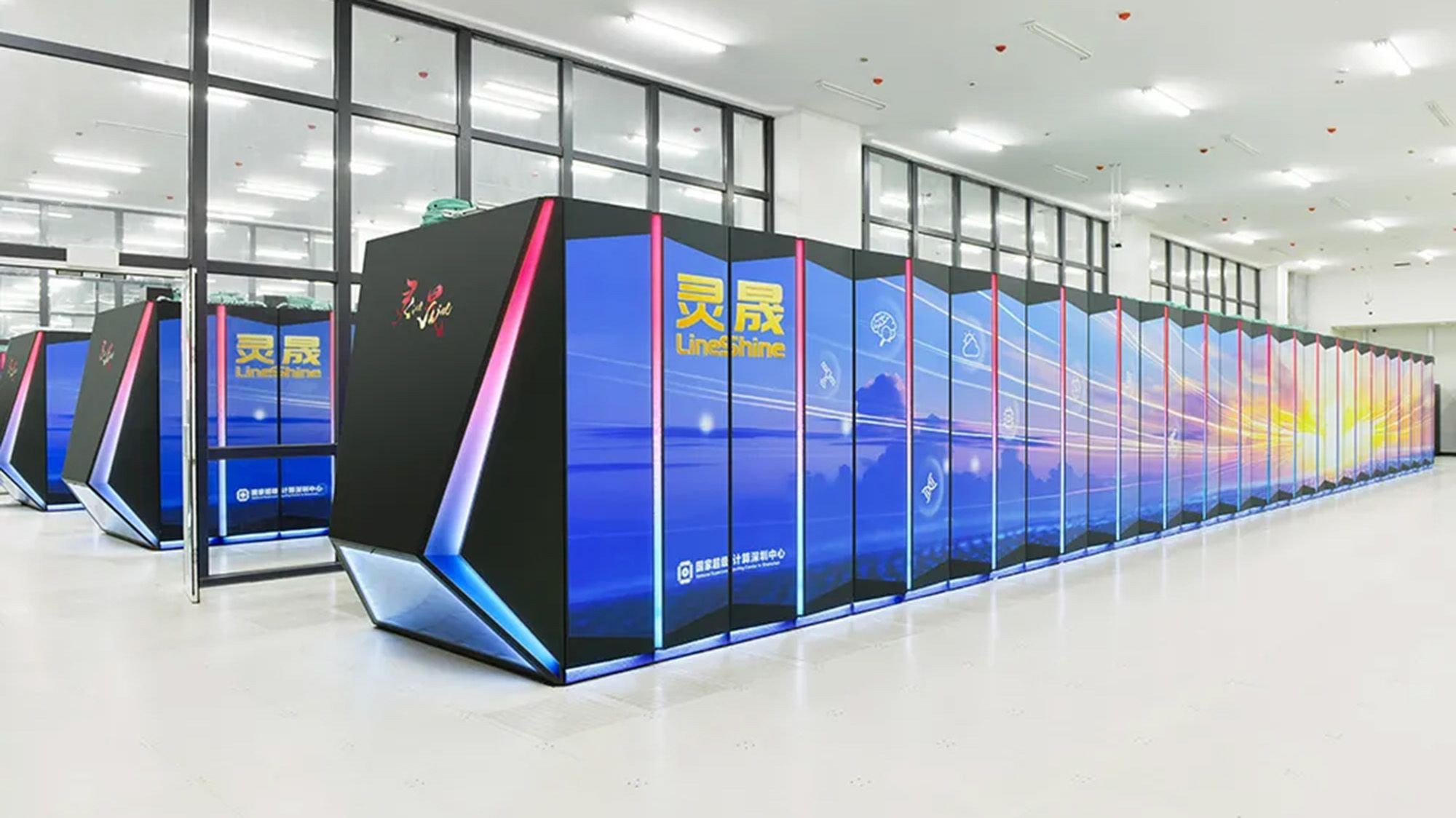
For the first time in a while, their hardware outran the US machines. LineShine, sitting in Shenzhen, grabbed the #1 spot in the latest TOP500 rankings.
It’s fast. Like, really fast.
We are talking 2.198 exascale speeds. That number means the system churns through more than a quintillion floating-point operations every second. A single FLOP? It’s a calculation. One exaFLOP is $10^{18}$ of those per second. Your laptop manages roughly 5 trillion.
LineShine is the only thing on the planet cracking 2 exascale.
This isn’t a surprise, not if you’ve been watching.
But it is significant.
The US hasn’t held the number one spot without contest since 2021 before El Capitan took it. Now the lead has flipped again. This is China’s fastest machine since 2017, and it came online back in early 2026.
It beats El Capitan by about 22%.
That California system sat pretty since late 2024. No longer.
Built different
Here’s the twist.
Most high-performance beasts use GPUs. Those graphics cards split workloads into tiny tasks, running parallel processes like a factory line. LineShine skips them. It runs purely on CPUs.
Just central processing units doing all the heavy lifting.
Why does this matter?
The US has choked China’s access to advanced chips since 2018. Semiconductors? Off limits. Specifically those fancy GPUs everyone wants for AI training.
Startups like DeepSeek had to get creative.
They trained models with less hardware. They squeezed performance out of weaker silicon. It wasn’t easy, but they wrangled their way into efficiency where brute force was banned.
LineShine proves that strategy works at the industrial scale too.
It isn’t just about hardware.
“The comprehensive breakthrough” in core tech barriers wasn’t a typo in the translated statement. It’s about control. The system represents an independent stack—software and hardware alike. They aren’t borrowing American silicon anymore.
Real work, real speed
It’s not a paper tiger.
They’re already running projects.
Atmospheric science simulations. Drug discovery pipelines. Artificial intelligence tasks. These are complex jobs that would break traditional computers or take years to finish. Supercomputers compress that time.
Speed is currency in research. LineShine is paying interest.
So where does the rest of the field sit?
El Capitan drops to second.
Three spots behind—rankings three through five—belong to US labs and a German machine.
Italy, Switzerland, Japan. The US. These nations round out the top ten.
“There is no single dominant technology path,” the TOP500 folks said.
They’re right.
CPU or GPU. Custom accelerators or APUs. The list shows vendors scrambling through different interconnects and system designs to find an edge. No single map to the summit.
Does a pure CPU system win the long game against hybrid GPU clusters?
We don’t know yet.
The blockades are breaking, or bending, depending on how you look at it.
China has their speed.
The US has their depth.
LineShine is online. The benchmark is set.
Everyone else is still typing.