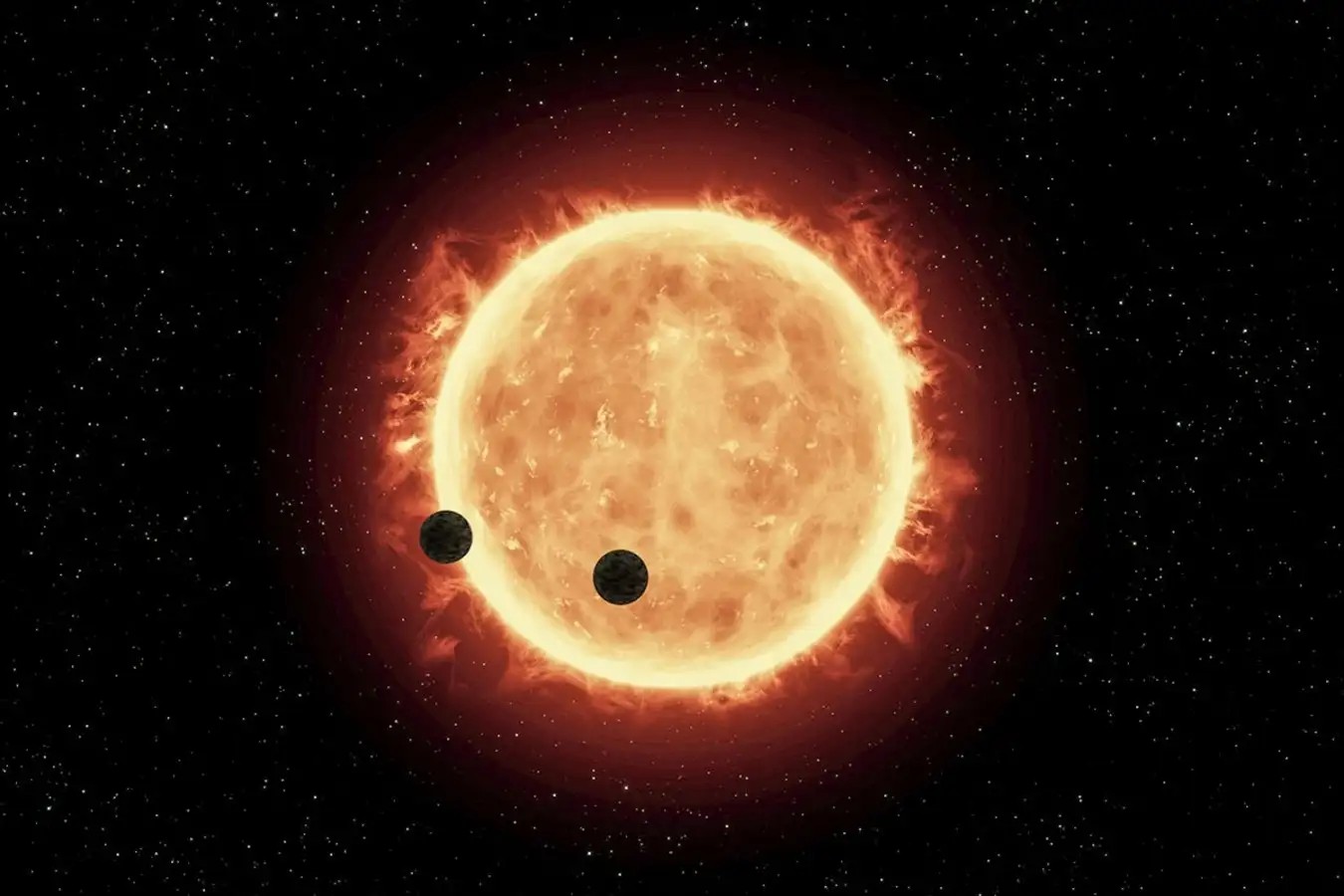
Astronomers have achieved a massive breakthrough in the search for exoplanets, identifying more than 10,000 candidate planets hidden within existing data from NASA’s Transiting Exoplanet Survey Satellite (TESS). This discovery represents one of the largest single “hauls” of potential worlds ever recorded, significantly expanding our map of the cosmos.
The Breakthrough: Finding What Was Previously Hidden
Since its launch in 2018, TESS has been scanning the skies for exoplanets —planets orbiting stars outside our solar system. The telescope uses a method called “transit photometry,” which detects the tiny, rhythmic dips in a star’s brightness caused by a planet passing in front of it.
While TESS has already confirmed over 750 exoplanets, a recent study led by Joshua Roth of Princeton University has unlocked a much larger treasure trove. By re-analyzing the telescope’s first year of data and combining multiple images, researchers were able to peer at fainter, more distant, or smaller stars than previously possible.
This refined analysis revealed 11,554 candidate planets, a staggering number. Remarkably, 10,091 of these candidates had never been identified in any previous search.
What Kind of Worlds Are They?
The new findings extend our reach much deeper into the Milky Way, detecting candidates up to 6,800 light-years from Earth—effectively doubling the distance TESS has previously explored.
The composition of these candidates follows a specific pattern:
– Hot Jupiters: Over 90% of the candidates are massive gas giants that orbit extremely close to their host stars, completing a full “year” in just a few days.
– Smaller Worlds: A much smaller percentage of the candidates are classified as Neptunes or super-Earths.
The Challenge of Verification
It is important to note that “candidates” are not yet confirmed planets. In astronomy, data can be deceptive; “false positives” such as binary star systems or instrumental glitches can mimic the signal of a planet.
The researchers are realistic about the numbers. Given that TESS typically has a false-positive rate of around 50%, Roth estimates that the actual number of real planets could be anywhere from 5,000 down to 3,000. Even at the lower estimate, this discovery would increase the total number of known exoplanets in the universe by nearly half.
Why This Matters for Science
For astronomers, quantity leads to quality. Having a massive sample size allows scientists to move from merely finding planets to understanding them.
“I want as many exoplanets as possible so that I can start slicing and dicing things,” says Jessie Christiansen, chief scientist of the NASA Exoplanet Science Institute. “How are they different? What kinds of different Jupiters do different stars make?”
By studying thousands of new worlds, researchers can identify patterns in how planetary systems form and evolve, helping us answer fundamental questions about the architecture of our galaxy.
Looking Ahead
This is only the beginning. There are still roughly 8,000 other candidates from previous studies awaiting examination, and experts predict that TESS could eventually confirm between 12,000 and 15,000 planets in total. As follow-up observations from other telescopes begin to verify these candidates, our understanding of the universe’s diversity will continue to expand.
Conclusion: By re-analyzing existing NASA data with more precise methods, astronomers have unlocked a massive catalog of potential worlds that could fundamentally reshape our understanding of planetary formation and the scale of the Milky Way.