Stargazers know the enemy. You drag out your tripod. You align your finder scope. And there it is. A cloud. Just one big, stubborn, white cloud blocking your view.
But come early July, I stop hating clouds. I start hunting for them.
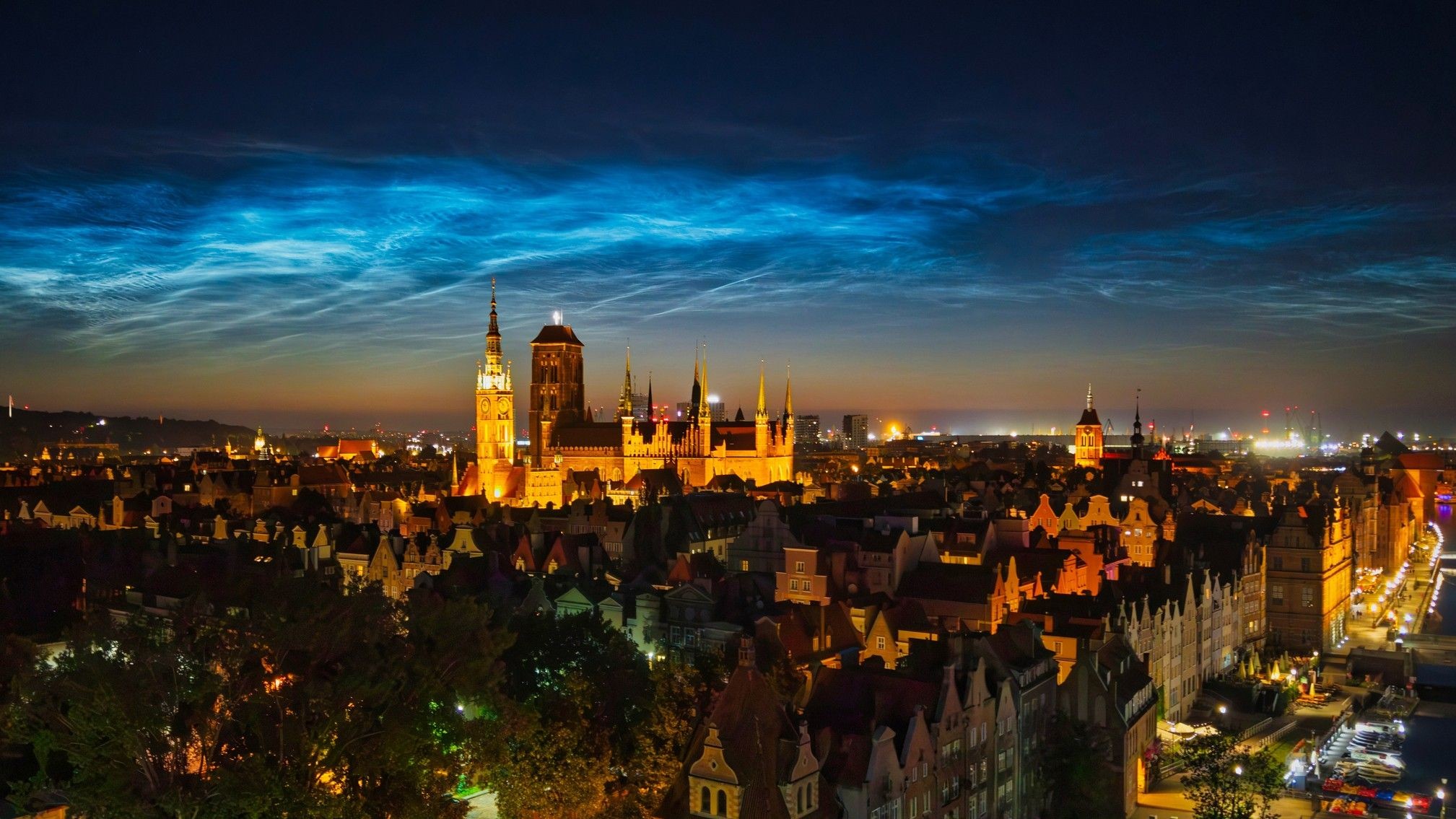
Not the fluffy white cumulus type that ruin sunset photos. I mean the “night shining” kind. Noctilucent clouds. They look like silver-blue electric ripples stuck on the sky’s screen saver. Bright. Delicate. Totally weird.
“They can be a magnificent sight to rivalry anything celestial.”
The Twilight Problem
Mid-latitude summer is a trap.
You survive winter freezing your fingers off just so summer will finally arrive with tolerable weather. Great. But then the sky refuses to go dark. In the north, July twilight lingers like a bad guest who forgot they’re invited. The northern horizon glows. Bright stars get washed out. Serious deep-sky observing becomes nearly impossible.
Or it seems that way.
If you look up instead of down, that lingering light creates a perfect stage. Late May through August, check the north during deep twilight. Those silver-blue strands you see? That’s it.
Space Accidents
They shouldn’t be there.
Noctilucent clouds live roughly 50 miles up. That’s the mesosphere. A dry, frozen wasteland above the stratosphere. Water vapor has no business existing up there. But physics does weird things when greenhouse gases cool the upper atmosphere while heating the ground below.
Cold enough. Wet enough. Boom.
Ice crystals form on tiny particles. They float high enough to catch sunlight even after sunset. Down here it’s dark. Up there the sun still shines on them. That’s why they glow with that eerie, cold brightness while ordinary clouds fade to black.
Is this natural?
Maybe. Or maybe climate change is feeding them. Rising greenhouse gases cool the mesosphere. More moisture reaches up. Evidence suggests these clouds are appearing more often. Further south than they used to. A bright side to a darker reality? Sure. Take the glow if you can get it.
When and Where
July is prime time.
North. Late June. Early July. Late July. Basically any northern latitude from the UK to Canada to the northern US. You don’t need total darkness. That’s the beauty of it. You just need clear horizons.
Look north about an hour or two after sunset. Or before sunrise. The sky should be dark everywhere except that glowing wedge in the north. If you see pale blue or silver ripples low on the horizon? Don’t blink.
Beginners mistake them for lit cirrus clouds. Wrong. Regular clouds darken once the sun dips. Noctilucent clouds get brighter as twilight deepens. They hold their ground.
Just Keep Looking
You can’t really plan a trip for this.
It’s too random. If they show up on Tuesday? Go out again Wednesday. They tend to hang around. Otherwise, it’s a shot in the dark. My strategy? Obsessive checking.
Every clear July evening. Before bed. I glance north. Is the texture wrong? Does the twilight look smoky? If yes, I step outside. You don’t need a telescope. You don’t need your eyes to fully dark-adapt. Just look up. Most astronomers are inside complaining about the moon or the twilight. The prize goes to the person who actually watched the horizon.
The Week of July 10–17, 2025
Darkness is scarce. The moon is the main nuisance, though this week it’s cooperating. It wanes toward new. Perfect.
- July 11 (Early Bird Required): Rise about 80 minutes before dawn. Catch the 15%-lit waning crescent moon cuddled against the Pleiades star cluster. Mars and Aldebran sit below. It’s tight. It’s pretty.
- July 17 (Evening Look): Look west after sunset. The opposite scenario. A waxing crescent moon (also 15% lit) sits near Venus.
Want detail? Point a scope at Venus. It’s showing a 60% lit gibbous face now, getting closer to us.
Cassiopeia: Your Anchor
When the sky is washed out, find Cassiopeia.
That familiar W shape? It doesn’t hide. It stays up. Circumpolar. Always there, spinning opposite the Big Dipper around Polaris. During summer twilight, it cuts through the haze better than most constellations. Use it to navigate. Use it to orient your head when you’re searching for those weird blue ripples nearby.
Look Down
My current obsession? Puddles.
Everyone looks up. Always. But this week offers dark skies great for night photography. The Milky Way is visible. But composition wins the game.
Find water. Puddles on wet pavement. The roof of a parked car. A still pond. Reflections simplify the chaos of the sky. They compress structure. Sometimes the reflection is more dramatic than the real thing.
Stargazing teaches us to lift our gaze. But tonight? Check the ground first. Earth is participating too. Just ignore it and you miss half the picture. 🌑💧