Childhood hurts. Not just the bruises. The invisible ones. The stuff that gets tucked into your cells.
A new study says it gets deeper. Way deeper. It burrows into your DNA regulation and stays there. Forever. Or at least, until you die.
This isn’t a metaphor.
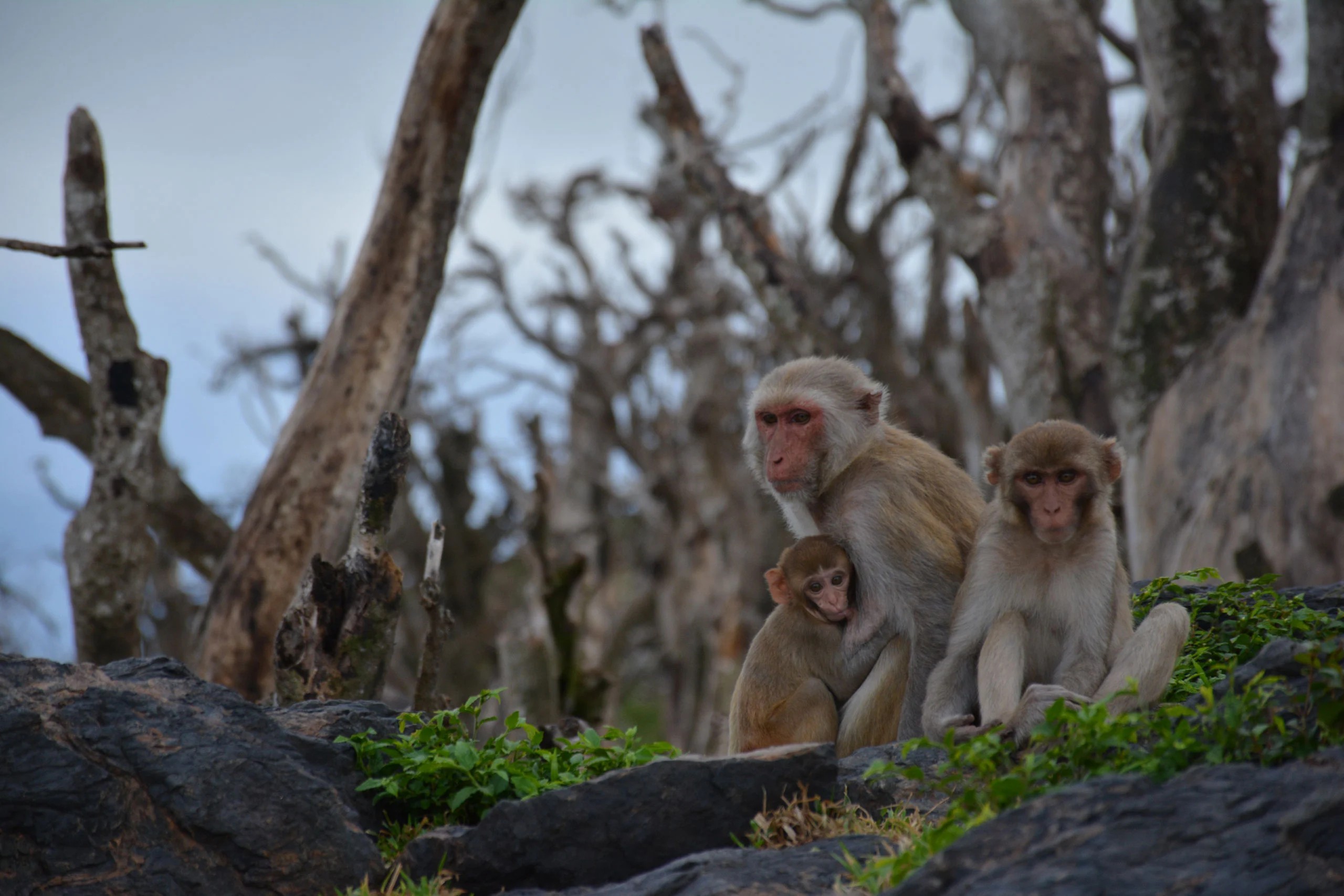
Published in Science, the research tracks rhesus macaques on Cayo Santiago—better known as “Monkey Island” off the coast of Puerto Rico. These aren’t lab animals in cages. They’re wild. Sort of. Free-ranging, complex, social, stressed, lucky, unlucky. All of it documented from day one.
Researchers at Arizona State, Vanderbilt, and partners took blood and tissue samples from 237 of these primates. Twelve tissues total. They mapped DNA methylation. This is the switch that tells genes whether to turn on or off. It’s how cells remember their jobs. It’s also how your body keeps score of how much punishment it has taken.
Most studies only look at blood.
Big mistake.
Blood is a Terrible Mirror
Here’s the problem. Blood tells a lie. Or at least, it tells an incomplete one.
Amanda Lea, co-lead author and assistant professor at Vanderbilt, points out that blood is the lazy standard in human aging studies. It’s easy to get a vial from someone. Harder to biopsy their thymus.
“Blood… only captures part of the picture.”
When you look elsewhere, the story changes.
The team built highly accurate epigenetic clocks for each tissue. These clocks guess how old an organ is biologically, not chronologically. Chronological age is simple math. Biological age is chaos.
In some tissues, like the thymus or the pituitary gland, aging looks intense. Loud. Other tissues? Quiet. Slow.
Doesn’t matter. They talk to each other.
If your liver looks old, your gut probably does too. There’s synchronization. But the tune is different depending on the instrument.
The Scar Tissue of the Genome
This is where childhood comes back to bite you.
The monkeys experienced what researchers call early life adversity. Lost moms. Low status mothers. Crowded groups. Stress. No one likes crowded groups. Especially not when you are young and weak.
The DNA methylation changed.
But not in a straight line. Not in the “stress makes you age faster” line we all assume is true.
Sometimes the changes mimicked rapid aging.
Other times they did the exact opposite.
Rachel Petersen, a postdoctoral researcher and co-lead, found that adversity doesn’t just press “fast forward” on the clock. It rearranges the numbers.
“We found that each type of adversity… targets specific regions… the effects are shared across tissues,” she says.
Thousands of genomic spots shifted. Many overlapped with natural aging spots. But the pattern wasn’t uniform. In the pituitary? Adversity strengthened aging markers. Elsewhere? Different rules applied.
It breaks the simple narrative. The idea that bad things early on equal linear biological decay later. It doesn’t. It’s messy. It’s complex. It’s biology.
Why We Need Whole-Body Truths
So why do this on monkeys?
Because humans lie. Even about themselves. Even when we don’t mean to.
Rhesus macaques live in societies that mirror our own in disturbing detail. Social hierarchy. Family drama. Resource competition. And we have the birth records. Every one of them.
“It allows us to connect detailed life history with molecular change in a way simply not possible in most human studies,” says Lea.
It’s rare data. Precious, even.
The implication is heavy. We’ve been looking at aging like a single number on a screen. A health metric. But if the epigenome reshapes itself based on what happens when you are helpless, then the “clock” isn’t broken. It’s working exactly as designed. Just not as designed by you.
“Aging is more than passage of time.”
It is a ledger. A record of who had your back, and who didn’t.
Does that mean you can’t do anything about it? Not necessarily. But it does mean the damage might already be encoded.
The funding came from NIH, NSF, and a few private foundations. Good luck finding those grants without a strong case for why it matters. It does. It matters because the past doesn’t leave. It just gets buried in your cells, waiting for the next generation of scientists to dig it up and show you that childhood isn’t over.
Not really.
It just got quieter.