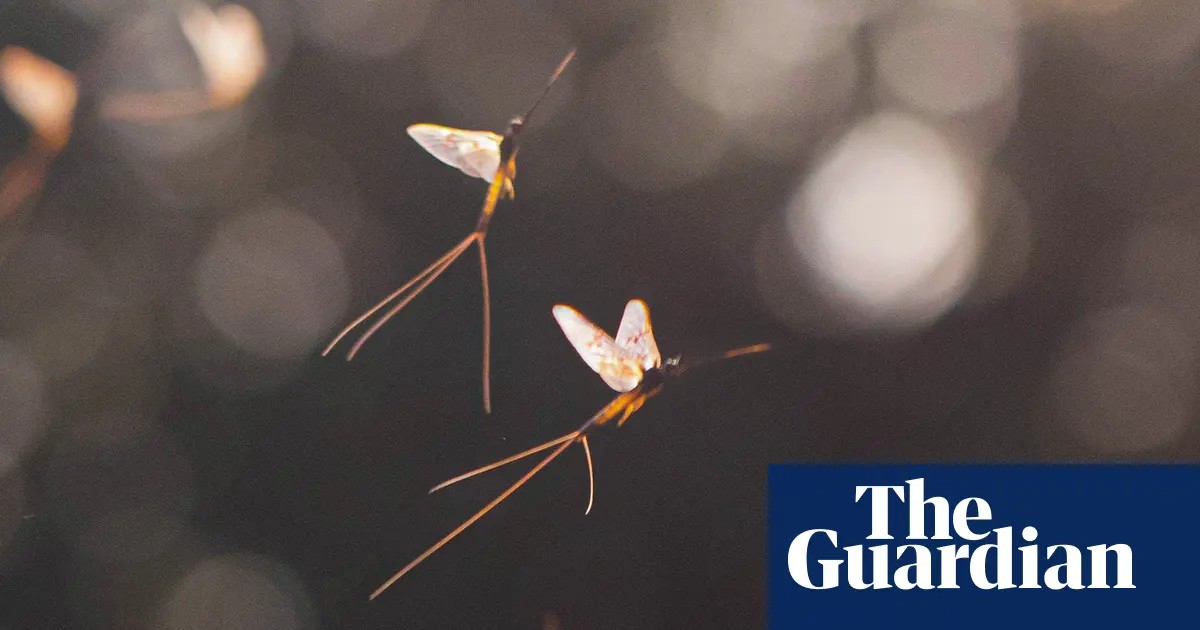
For hundreds of millions of years—predating the dinosaurs and the rise of human civilization—mayflies have performed a peculiar aerial ritual. On spring evenings along rivers like the Thames, thousands of these insects engage in a vertical “dance,” where males climb steeply into the air, flip, and glide slowly back to Earth in a skydiving posture.
While this behavior has long been a mystery to biologists, new research suggests it is not merely a spectacle, but a critical survival mechanism designed to solve a difficult biological problem: finding a mate in a chaotic swarm.
Solving the “Identification Problem”
A study led by Samuel Fabian of the University of Oxford and colleagues at Imperial College London, recently published in the Journal of Experimental Biology, has finally decoded the logic behind this flight pattern. By using 3D filming to track large swarms in London, researchers discovered that the dance serves as a visual filter.
The mechanics of the dance are surprisingly simple:
– Vertical vs. Horizontal: Male mayflies fly in steep, vertical paths. In contrast, females tend to fly horizontally above the swarm.
– The Horizon Rule: By maintaining this vertical trajectory, males can distinguish between sexes. Simulations showed that males instinctively stop pursuing any target that drops below their visual horizon.
This distinction is vital because mayflies are notoriously “bad” at filtering targets. Fabian notes that the males lack precision; they are so driven to mate that they will attempt to pursue almost anything—even objects as large and different as a beach ball. By using the vertical dance to separate themselves from the horizontal flight of females, males ensure they don’t waste precious energy on the wrong targets.
A Race Against Time
The stakes for this accuracy are incredibly high. Mayflies are among the shortest-lived insects, often surviving for only a few hours to a few days. Their entire existence is a frantic race to pass on their genes before they perish. In low-light conditions, where males and females look nearly identical, the vertical dance becomes their only reliable way to navigate the chaos of reproduction.
The “Insect Apocalypse” and Declining Populations
Despite the evolutionary success of this ancient dance, the mayfly is facing a modern crisis. While there are over 3,000 species globally, many are currently in steep decline—a phenomenon often referred to as the “insect apocalypse.”
The situation is particularly dire in the UK’s chalk streams, which are highly sensitive to environmental changes. Data from the nonprofit group WildFish reveals a sobering trend:
– Species Loss: Britain’s chalk streams have lost an average of 41% of their mayfly species since 1998.
– Environmental Stressors: The decline is driven by a combination of pollution, sediment runoff, reduced river flows, and rising water temperatures.
– Egg Vulnerability: Research indicates that even minor pollution levels in English rivers can kill up to 80% of mayfly eggs laid in riverbeds.
This loss is more than just a biological statistic; it represents the erosion of freshwater ecosystems that have been stable for epochs. As these insects disappear, the “spectacular hatches” that have defined summer landscapes for millennia are vanishing.
“These are quite urban places with lots of traffic, but they’re still hanging on and they’re still doing this dance that they have probably been doing since before Britain was separated from mainland Europe.” — Samuel Fabian, University of Oxford
Conclusion
The mayfly’s ancient dance is a sophisticated evolutionary tool used to navigate a high-stakes, short-lived reproductive window. However, as pollution and climate change degrade freshwater habitats, this millions-year-old ritual faces the very real threat of extinction.