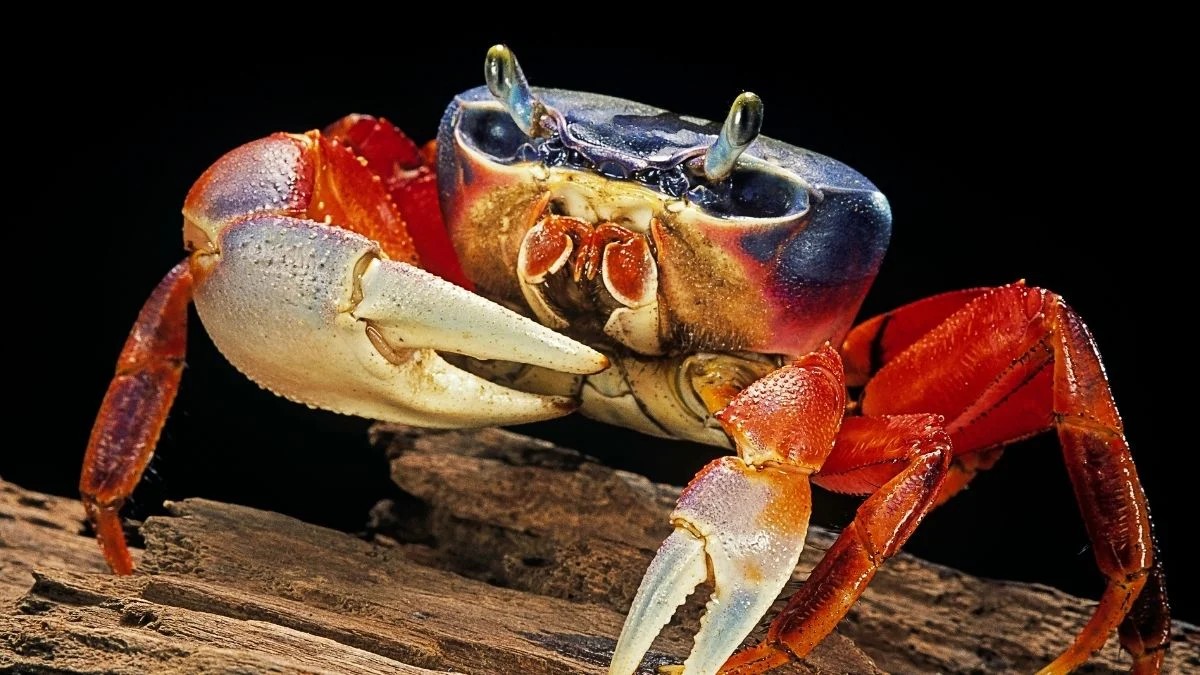
While internet memes often joke that evolution is obsessed with creating crabs, the biological reality is much more nuanced. While many different species have independently evolved crab-like body shapes—a process known as carcinization —scientists have discovered that one specific trait remains unique to the “true crab” family: the ability to walk sideways.
New research suggests that this specific behavioral innovation occurred only once in evolutionary history, providing a massive competitive advantage that allowed true crabs to conquer the world’s oceans.
A Singular Evolutionary Breakthrough
In a study led by behavioral ecologist Yuuki Kawabata of Nagasaki University, researchers analyzed 50 different species of true crabs (Brachyura ). By combining direct observations with genetic “family trees,” the team reached a striking conclusion: the sideways walk was not a recurring trend, but a single, revolutionary event.
The data indicates that this movement style emerged in a single common ancestor approximately 200 million years ago. This period followed the Triassic-Jurassic extinction, a time when shifting Earth crusts expanded shallow marine environments—the ideal playground for a new kind of crustacean.
The Competitive Edge: Defense and Diversification
Why does walking sideways matter so much? The answer lies in survival and ecological expansion.
- Predator Evasion: Most predators—such as seals, otters, and sharks—move in a forward direction. The ability to scuttle sideways allows crabs to dodge attacks with sudden, lateral agility that forward-moving predators find difficult to track.
- Niche Colonization: This movement style appears to be a key driver behind the massive success of the Brachyura group. There are roughly 7,904 species of true crabs, far outnumbering their close relatives like hermit crabs or lobsters.
- Global Reach: This single behavioral innovation helped true crabs diversify into almost every imaginable habitat, from deep-sea trenches to freshwater rivers and even terrestrial environments.
“While body shapes may converge multiple times, behavioral changes such as sideways walking can be rare,” explains Kawabata.
Exceptions to the Rule
Despite the dominance of the sideways gait, it is not an absolute law for all true crabs. The study found that out of the 50 species observed, 35 were predominantly sideways walkers, while 15 moved forward most of the time.
Interestingly, the genetic data suggests that these forward-moving crabs didn’t evolve from a different lineage; rather, they likely evolved from ancestors who walked sideways, eventually reverting to a forward motion.
Scientific Caveats and Future Directions
While the findings are groundbreaking, the scientific community has noted areas for further investigation. Peer reviewers pointed out several limitations that future studies should address:
- Sample Size: The study used only one representative per species. To ensure accuracy, researchers need to observe multiple individuals to confirm “normal” behavior for each species.
- Anatomical Links: It remains unclear whether the sideways walk drove the evolution of the crab body shape, or if the body shape made the walk possible.
- Categorization Methods: The study used a fixed 60-degree angle to distinguish between forward and sideways walkers. Critics suggest this mathematical cutoff might not account for biological variations across different species.
Conclusion
The evolution of the sideways walk represents a rare moment where a single behavioral shift unlocked a massive wave of biological diversity. By mastering a unique way of moving, true crabs transformed from a single lineage into one of the most successful and widespread groups of animals on the planet.