Citizen scientists just cracked a code about fatherhood. Not human fatherhood. Spider-cousin fatherhood.
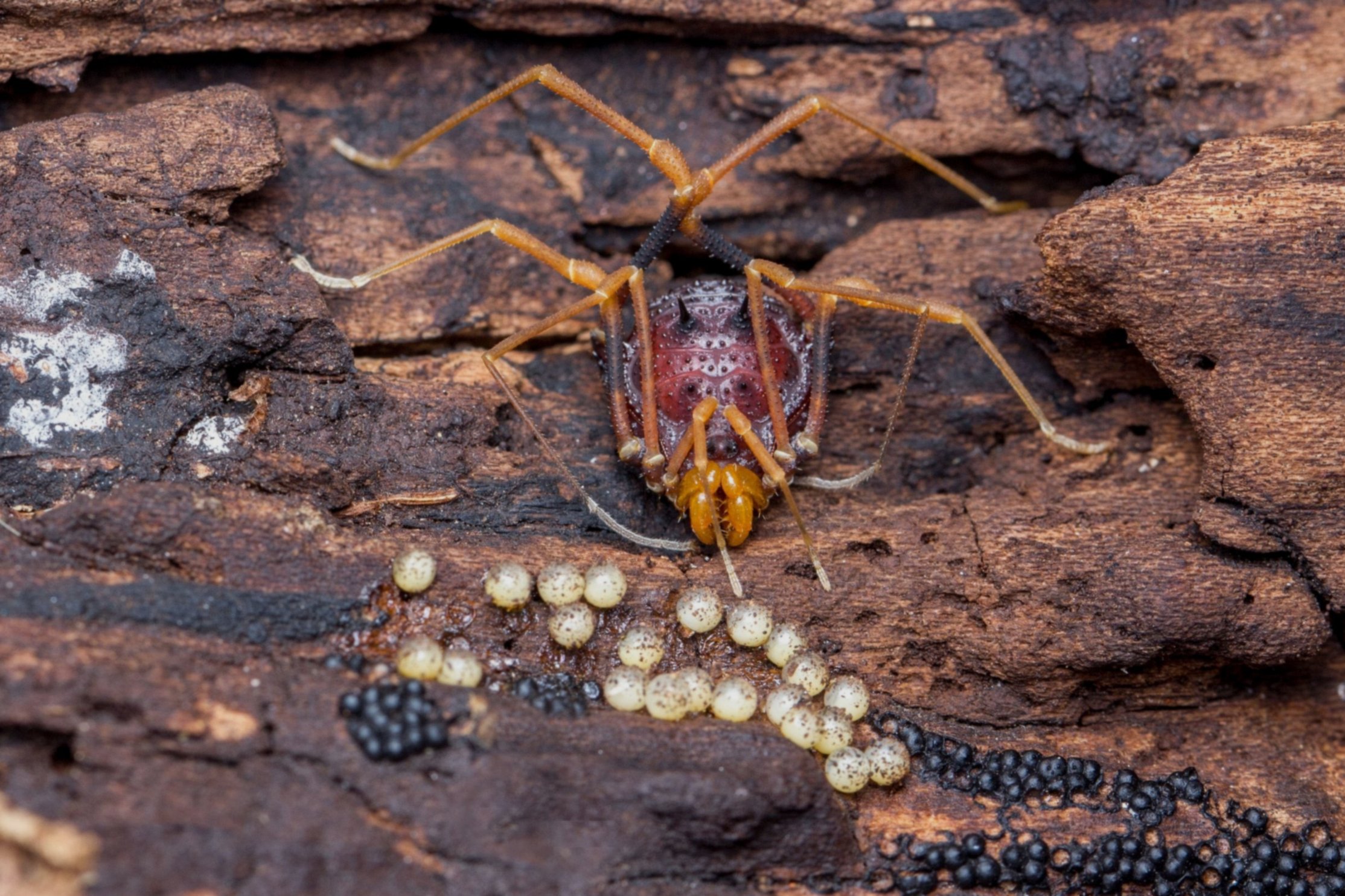
It turns out the tiny, many-legged things called harvestmen have been raising kids for eons. And the guys are doing a lot of the heavy lifting. A new study, published in the Zoological Journal of the Linnean Series, uses data from iNaturalist to prove that parental care evolved multiple times in these arachnids.
That is surprising. Paternal care is weird in the animal world. Most species leave that job to moms or skip it entirely. Harvestmen? They’re an outlier.
The data problem
Before this, we only knew about parental care in 80 harvestmen species. That data took nearly thirty years of grinding fieldwork to compile. Slow. Expensive. Limited.
Then Glauco Machado and his team looked at iNaturalist.
Two days. That’s it. They found 62 new cases of parents guarding their young in two days. Just by scrolling through user-submitted photos from around the globe.
The dataset doubled. Overnight.
This isn’t just a speed hack. It’s a shift in how science happens.
“I would never be able to do this if I had to go around to every single museum in the world,” said Machado, the lead researcher. “That would cost a fortune and take forever.”
Now he did it in a week. Sitting at his computer.
Evolving dads
The new numbers let the team map the family tree. And the story it told was messy. Beautifully messy.
Parental care didn’t happen once. It happened, got lost, and then happened again. Over and over.
Mothers were the traditionalists. Their care always started from nothing. If mom watched the eggs, her ancestors probably didn’t. Simple line.
Fathers? More flexible. They could jump from no care straight to caring for the young. Or they could take over from mothers who had been watching the clutch.
Why would a male swap places with a female? Or step in from the sidelines?
The theory is “enhanced fecundity.” Fancy talk for sex appeal.
In species where dads do all the babysitting, it acts as a mating signal. Females prefer males who guard the eggs. It proves he’s fit. Committed. Good genes. It’s sexual selection dressed up as parenting.
Who cares about spider dads?
You might not care. Unless you care about understanding life itself.
Harvestmen aren’t even true spiders. They’re Opiliones. But they’re everywhere. With nearly 7000 known species, they represent 0.6 percent of all arthropod diversity. Small slice.
Big impact. They account for more than half the independent origins of paternal care in all of nature. That’s insane odds for a group that looks like eight-legged shriveled grapes.
Because this behavior is so rare elsewhere, studying these bugs lets us test theories on how parenting evolves. How genes drive behavior. How ecosystems shift.
But here is the catch.
The photos need eyes that know what to look at.
iNaturalist users are great at spotting nature. They are not experts at distinguishing between a male guarding eggs and a male just standing there looking territorial. Those two things look identical if you haven’t spent a lifetime squinting at microscopic joints and pedipalps.
“Taxonomists are still the ones providing names,” Machado says. “You can’t conserve something you haven’t named.”
Without experts to clean up the citizen data, it’s just noise. The crowd provides the volume. The specialists provide the accuracy. They need each other.
Open endings
The study has limits, of course. People upload pictures of rare events. They rarely photograph parents who are not caring for their young. So we see the caretakers. We don’t see the neglecters. This creates a sampling bias. It’s easy to fix if you can actually observe the behavior, which is hard.
But who cares about the holes in the net when you’re pulling up more fish than you ever could have alone?
This work helps frogs. Insects. Maybe us. Any creature where kids need help surviving.
Machado thinks this is just the beginning. He wants everyone working on animals with complex social lives to dig into public data. Why?
Because nature is faster than we are. But if we crowdsource the watch, maybe we can keep up.
It’s not a perfect picture. Just a bigger one. And isn’t that what progress usually is?
🕷️