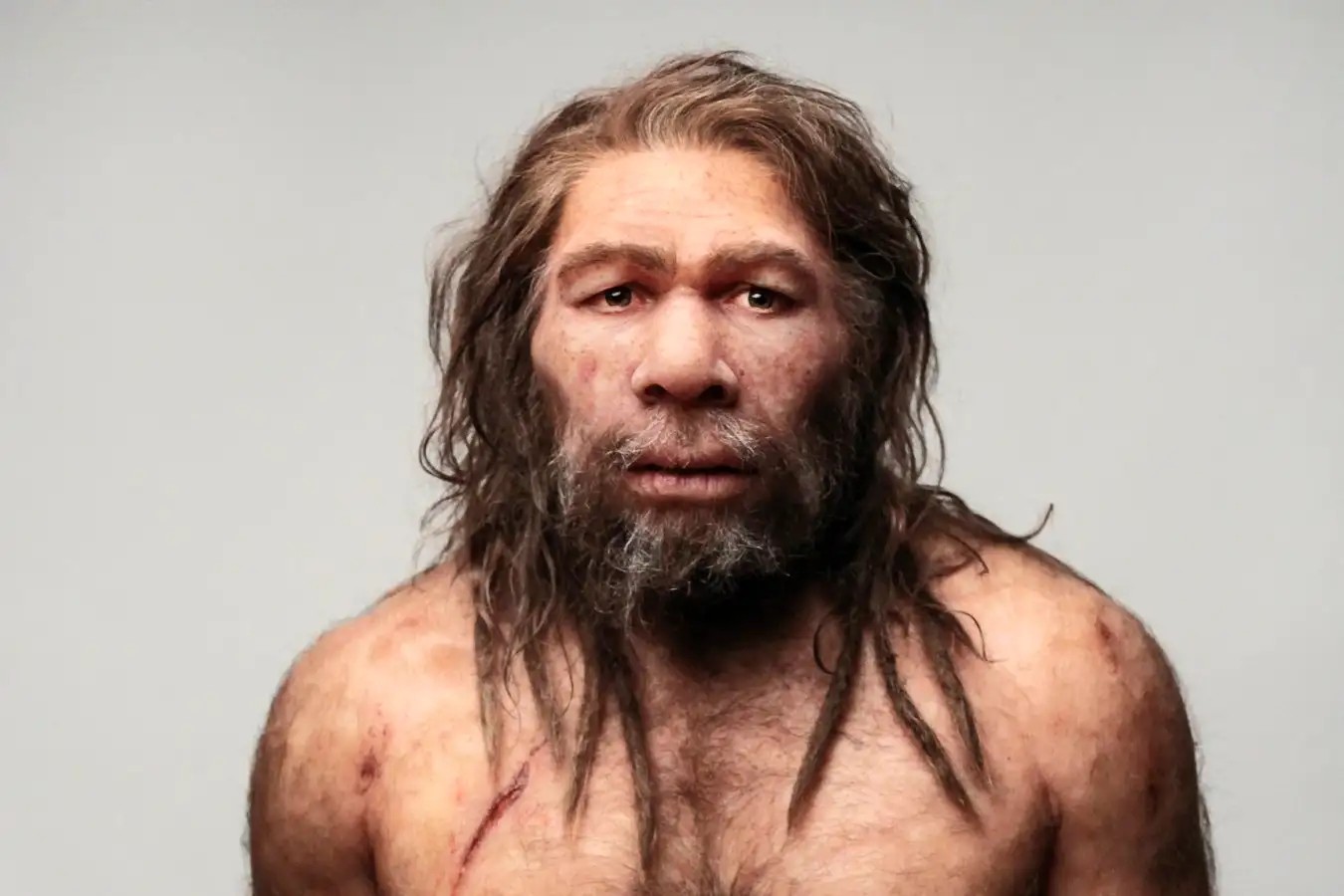
For decades, the image of the Neanderthal has been one of a primitive, brutish relative of modern humans. However, recent archaeological breakthroughs are painting a much more sophisticated picture. From using birch bark tar as an antibiotic to creating art with ochre, Neanderthals were far more capable than we once believed.
Yet, as our understanding of how they lived grows, a much deeper mystery remains: How did they begin?
While we have a wealth of information about their lifestyle, their evolutionary origins remain one of the most significant “black holes” in paleoanthropology.
The Genetic Puzzle: Searching for “Ancestor X”
To understand the Neanderthals, scientists look at the genetic map. We know that Neanderthals were closely related to the Denisovans (an ancient group from East Asia). Genetics suggests that both groups shared a common ancestor, a mysterious population that researchers have dubbed “Ancestor X.”
The current genetic model suggests a massive split:
1. Ancestor X lived somewhere in Western Asia or the Middle East.
2. This population split into two branches.
3. One branch led to modern humans in Africa.
4. The other branch (the “Neandersovans”) led to both the Neanderthals in Europe and the Denisovans in Asia.
The problem? We have never found a fossil for “Ancestor X,” nor have we found the “Neandersovans.” We are essentially trying to solve a family tree where the most important ancestors are missing.
The Three Main Candidates
Because we lack DNA from many ancient fossils, researchers have had to rely on physical traits to guess who might be “Ancestor X.” There are three primary candidates:
- Homo erectus: The first great wanderer, known for moving from Africa into Asia and Europe. While they fit the timeline, we have almost no evidence of them living in Europe, making a direct link to Neanderthals difficult to prove.
- Homo antecessor: Found in Spain, these hominins lived in the right place at roughly the right time. Some protein analysis suggests they might be related to Ancestor X, but because they are only known from a single site, we don’t know if they were a widespread species.
- Homo heidelbergensis: Once the leading candidate due to their similar skull shapes, they have fallen out of favor. Recent reclassifications and a lack of widespread fossils make them a less certain link.
The fundamental issue is that archaeology and genetics are telling different stories. The fossils suggest one path, while the DNA suggests another.
A Radical New Theory: The Hybrid Origin
One of the most provocative ideas comes from Harvard geneticist David Reich. He has proposed a hypothesis that could fundamentally rewrite human history.
Instead of Neanderthals being a separate branch that split away from us, Reich suggests they might be the result of early modern humans moving into Europe.
The Hypothesis: Early Homo sapiens migrated out of Africa between 400,000 and 250,000 years ago and interbred with local European hominins. The resulting hybrid population eventually became the Neanderthals we recognize today.
This theory is supported by a strange genetic quirk: Neanderthals carry modern human Y chromosomes and mitochondrial DNA. Under Reich’s model, this isn’t just a result of later interbreeding—it is the very foundation of their existence. It would also explain why certain technologies, like Levallois stone tools, appear in both Africa and Europe around the same time.
Why This Matters
If Reich’s hypothesis is correct, the line between “us” and “them” disappears. Neanderthals wouldn’t just be our cousins; they would be our descendants—a lineage born from the very first migrations of our own species.
Whether this theory holds up to peer review or is eventually debunked, it highlights a shifting paradigm in science. We are moving away from a simple, linear view of evolution and toward a much more complex reality: humanity is a hybrid species, shaped by constant movement and interbreeding.
Conclusion: The search for Neanderthal origins is moving away from simple “branching” models toward a more complex story of migration and hybridization, suggesting that the history of our species is far more interconnected than we ever imagined.