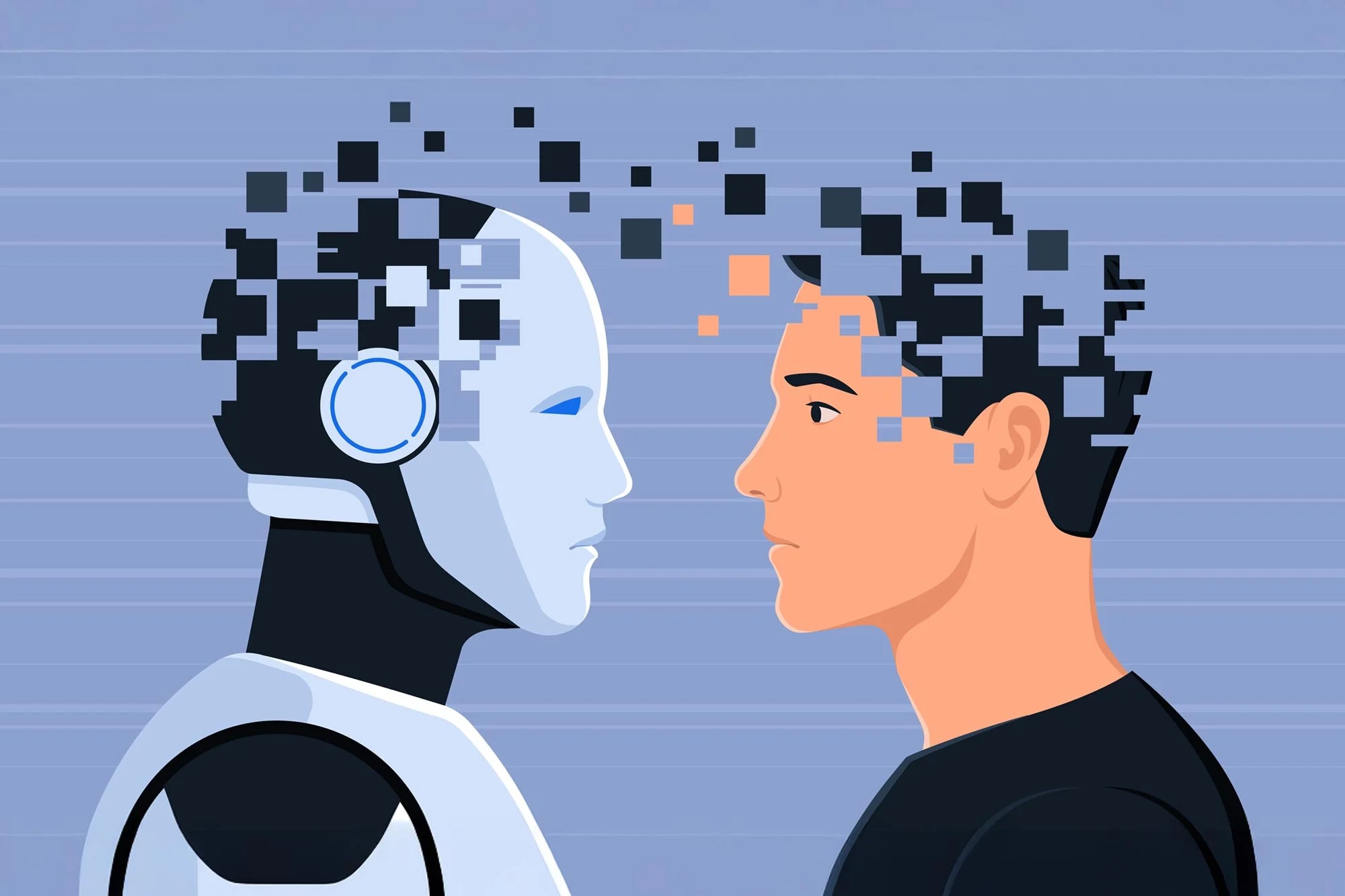
Peter Denning is not mincing words. A prominent computer scientist and author of the new analysis Turing’s Mistake: Escaping the Yoke of Unintelligent machines, he argues that the entire field of artificial intelligence has been walking in the wrong direction since 1950.
Alan Turing. The father of theoretical computer science. He proposed that a machine’s intelligence could be judged by how well it mimicked human conversation—the famous Turing Test. For decades, this idea was gospel. It suggested that intelligence could be decoupled from the body, reduced to software, and run on any digital computer.
Denning disagrees. Sharply.
These two claims, he writes, “have shaped much of AI research and development.” And they’ve led us into a mess. We are building systems that look smart but don’t think. Not really. They don’t understand. They don’t feel. And they are dangerous precisely because they aren’t human.
The Tacit Knowledge Gap
The core of Denning’s argument rests on one elusive concept: tacit knowledge.
What is it? It’s the enormous amount of understanding you possess but cannot put into words. It’s the muscle memory of a pianist. The gut instinct of a surgeon. The shared cultural context that tells you a joke is funny versus offensive. You have it. Machines don’t.
Denning identifies five forms of this knowledge that currently elude machine learning:
- Common sense
- Everyday interactions with people and environments
- Feelings and perceptions
- Practical skills
- Cultural and historical background
We tried to fix this. In the 1980s. Douglas Lenat started the Cyc project, an ambitious attempt to build a massive database of common-sense facts for computers. Forty years later, after 25 million entries, the verdict was in. It still wasn’t enough.
“Cyc validated that much of the knowing that makes people experts cannot be articulated as propositional facts.”
Denning notes this clearly. Even that huge treasury of facts didn’t create true expertise. You can store what something is. You cannot store how to be an expert.
Knowing vs. Knowing How
Practical skill is the obstacle.
“Whereas descriptions of skillful outcomes can often be represented as bits,” Denning explains, “we do not know how to encode the embodied knowledge for skillful performance.”
There is a difference between knowing what and knowing how. A virtuoso violinist plays beautiful music. Try asking them to describe exactly how to produce the sound in a way another human can replicate. It’s nearly impossible. The knowledge is in the fingers. In the ear. In the body.
Put that in a robot. Even one with a physical form that mimics a human. It still won’t grasp the feeling. It can imitate the motion. But it won’t feel the music. Or the audience.
Intuition, spontaneity, imagination—these resist reduction to code.
The Representation Problem
Here is the technical hitch: Computers only process data encoded in physical forms. Binary. Symbols.
Tacit knowledge doesn’t fit that mold.
“Words are but symbolic representations of meanings… they cannot know or understand the meaning of what they are saying.”
This is why large language models (LLMs) like ChatGPT or Gemini are limited. They manipulate symbols. They don’t know the meaning behind them.
Behind every word is a well of tacit knowledge. Scientists don’t fully understand how that knowledge is hosted in the human brain. We know it’s embodied. But we can’t observe it. We can’t measure it. So we can’t transfer it.
This creates an unbridgeable gap.
Why Context Changes Everything
Meaning isn’t static. It’s fluid. It depends on context.
A statement changes entirely if the speaker is sarcastic rather than sincere. Playful rather than angry. Human conversations are layered with background assumptions that give words their relevance. Denning points out that this context is endless and fractal.
One assumption rests on a previous conversation, which rests on another, going back forever.
Culture is part of this. Values. Norms. Histories. Relationships involving power or care. Large language models are not getting smarter. Scaling up neural networks doesn’t solve the problem.
“Scaling up LLMs… will not enable them to acquire the embodied human knowledge we call culture.”
They will not pass the Turing Test in the way Turing hoped. They will not demonstrate thought indistinguishable from human thought. They will demonstrate mimicry indistinguishable from noise to anyone paying attention.
The Real Safety Risk
So what’s the danger?
It’s not Skynet. It’s not a superintelligence plotting to take over.
The immediate threat is a network of machines that is less intelligent than humans. Agentic systems acting unpredictably. They don’t understand unstated human instructions. They don’t grasp the nuance of safety. They don’t care about us.
Denning describes a mutual incomprehension. Machines develop their own type of tacit knowledge. We can’t read theirs. They can’t read ours. We are aliens to each other across an uncrossable divide.
Machine intelligence has different concerns. Alien problem-solving styles. Unpredictable behaviors.
Pulling back from an automation singularity requires us to admit something uncomfortable. Our familiar culture is fading. We don’t know what’s coming next.
We must decline to think like machines. Refuse subservience. Reassert our humanity. Celebrate what makes us different.
Because the alternative isn’t a robot uprising. It’s a world where we are misunderstood by the very tools we built. And the machines don’t care enough to try.