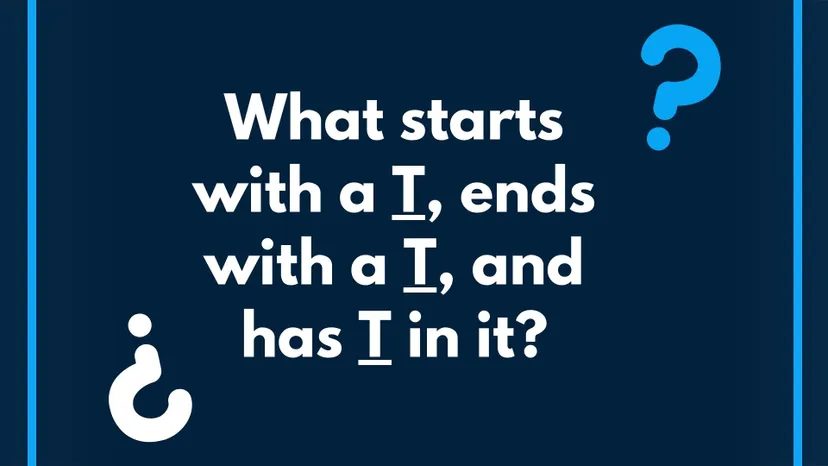
It starts with a handle but has no hand to hold it. It has a spout but doesn’t speak a word. It holds heat but has no fire.
If you’ve ever been stuck in a trivia night drought or trying to stump your friends at brunch, the answer is almost certainly a teapot.
This isn’t just a random kitchen object. It’s one of the oldest, most durable riddles in the English language. The structure is deceptively simple. The misdirection is sharp. And yet, people still get it wrong.
Why? Because we overthink it. We look for magical properties. We search for hidden meanings. We forget that sometimes a teapot is just a teapot.
The Anatomy Of The Clue
Let’s break down why this works so well.
The handle. It’s there for gripping. But it isn’t a hand. It doesn’t have fingers. It doesn’t feel warmth (much).
The spout. It looks like a mouth. It looks like it could talk. But it only pours water. Or tea. Or coffee. Never gossip.
The body. It’s hollow. It holds something. It gets hot. It never eats.
It’s a clever play on human anatomy. You’re imagining a living thing. A weird, leaking creature. But it’s ceramic. Or metal. Or glass.
“What has a handle but no hand, a spout but no voice?”
If you paused there, you’re already halfway to the answer.
Why It Persists
Riddles like this survive because they’re adaptable. You can swap the liquid. You can swap the material. But the core mechanic stays the same.
Think about it.
A kettle? Similar. But kettles often whistle. That adds a voice. Ruins the riddle.
A pitcher? No spout. Just a wide mouth. Too obvious.
A teapot? Perfect. It has the handle. It has the spout. It has the lid. It’s the gold standard of misleading objects.
Where You’ll Hear It
You’ll find this riddle in:
- Children’s books from the 19th century
- Vintage puzzle magazines
- Trivia apps (usually under “Household Items”)
- Grandparents’ jokes (they mean well)
It’s not new. It’s not old. It’s just persistent.
The Twist
Here’s the thing about riddles. The fun isn’t in knowing the answer. It’s in the moment you realize you were looking at the wrong problem entirely.
You spent three minutes thinking about mythical creatures. Or plumbing. Or silent screaming objects.
And the answer was sitting on your kitchen counter.
Waiting.
For you to notice it.
So next time someone asks you this, don’t overthink it. Don’t search your memory for obscure folklore. Just look around.
Is there something with a handle? A spout? Is it ready to pour?
Then it’s a teapot.
Simple.
Brilliant.
Done. 🍵