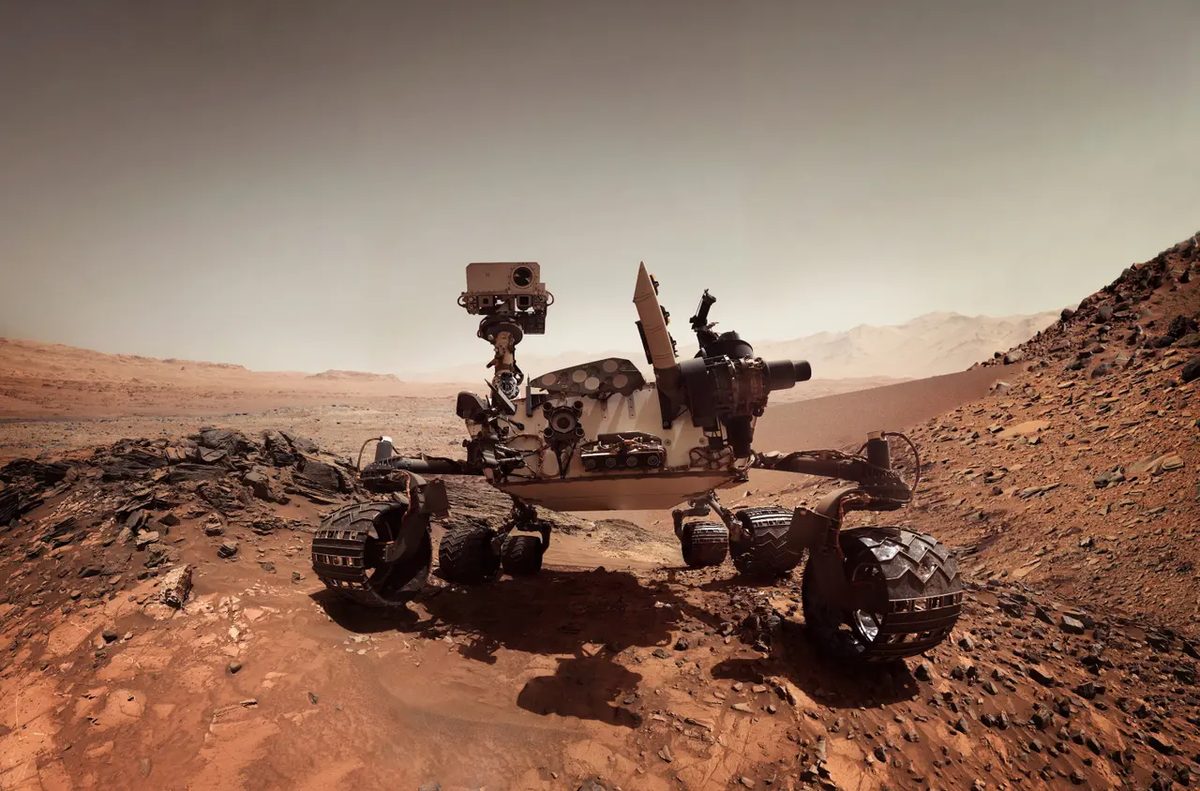
The long, dusty trek is finally over. NASA’s Perseverance rover has reached the one place it has been driving toward since it touched down in February 2021: the Jezero crater delta. For a mission that cost billions and crossed 300 million miles of vacuum, this is the payoff moment.
Why this specific spot? Why spend years navigating rocky terrain to get here? The answer lies in water. Billions of years ago, a river carved its way through the Martian landscape and dumped its sediment into a lake filling the impact crater. That river mouth is the delta. Today, the lake is bone dry. The rover is parked right where the water once stopped.
« We will search for signs of ancient life in the rocks at the base of the delta, » Ken Farley, a researcher on the Mars 2020 mission, told reporters.
Farley’s team believes those rocks were once mud.
Mud is good. Mud is interesting. Mud preserves things. When rivers flow into still water, they slow down. Heavy particles drop first. Fine particles—clay, silt, organic matter—settle gently at the bottom. This layering process creates a perfect archive. It traps microbes, if they existed, and freezes their chemical signatures in stone.
This isn’t just about finding rocks. It’s about finding context.
Most of Mars is covered in volcanic rock or windblown dust. Volcanic rock tells you about heat and pressure. Dust tells you about wind and erosion. But sedimentary rock at a lake bed? That tells you about life. Or at least, the environment that could support life.
The Jezero delta is a time machine. It holds the sedimentary layers from a time when Mars was wet, warm, and possibly habitable. Perseverance didn’t just land there by accident. The landing site was chosen specifically because orbital data showed clear evidence of an ancient river delta. Science doesn’t guess with rovers. It calculates.
Now, the wheels have stopped. The drills are out.
Why Sedimentary Rocks Are the Holy Grail
If you want to know why scientists obsess over the Jezero delta, think about how fossils form on Earth. You don’t find dinosaur bones in granite. You find them in limestone or shale. Soft tissues decay. Hard bones rot. But if an organism dies and is quickly buried in fine sediment, it can be preserved.
Mars had that same process.
The rocks at the base of the delta represent the bottom of an ancient lake bed. They are likely composed of mudstones and carbonates. These rock types are notorious for trapping organic molecules. Carbon is the building block of life as we know it. If life ever existed on Mars, it would have been carbon-based.
The rover’s job now is to sample these specific rocks. It needs to avoid the volcanic debris scattered around the crater floor. It needs to get down to the layers that settled when the water was still.
« We will search for signs of ancient life in the rocks at the base of the delta »
This is a direct quote from Ken Farley. But what does “search” actually mean?
It means drilling. It means analyzing. It means looking for isotopic ratios that don’t

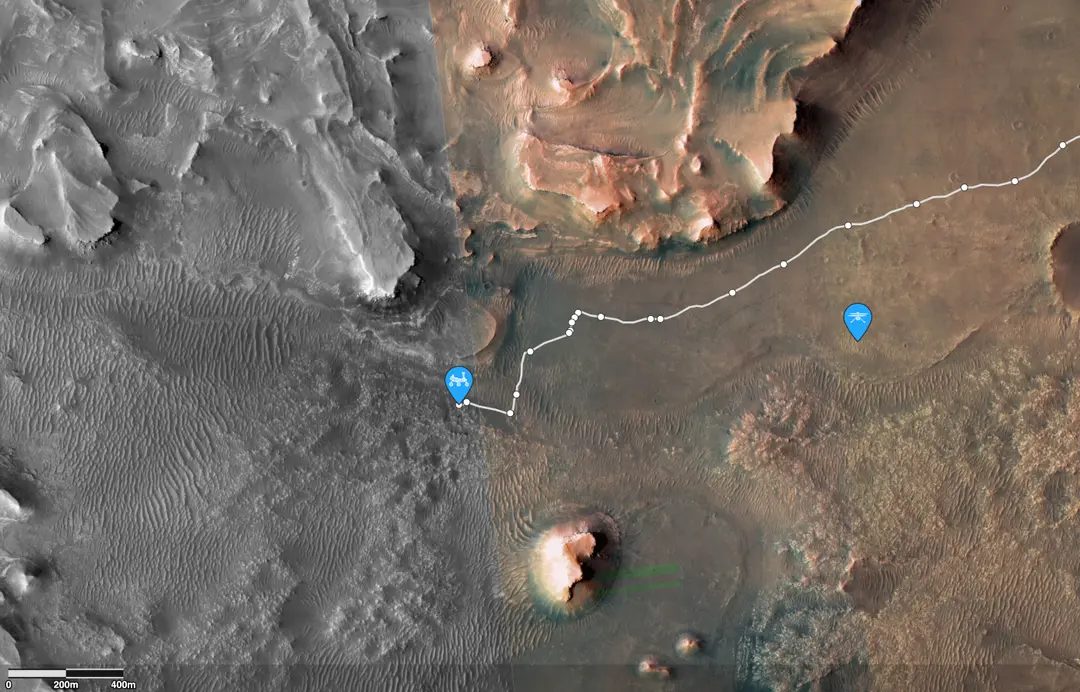
The rover arrived at the delta’s edge on April 13. That wasn’t a quick dash. It was a five-kilometer trek across Martian terrain that demanded precision. The path had to be mapped. Obstacles avoided. Some of it happened in total autonomy using its IAAutoNav system. The daily average? About 211 meters. For a whole month.
Now, the astromobile sits at a spot the team has nicknamed Three Forks. It’s a junction. A literal crossroads for exploration. Scientists on Earth are staring at three distinct paths. None of them are wrong. All of them look promising. This is where the second major phase of the Perseverance mission begins.
Why Three Paths Matter
The location isn’t arbitrary. Each route offers a different geological narrative. The goal remains the same: finding signs of ancient life. But the terrain tells different stories depending on which way you turn.
The scientists have to choose. It’s not a simple matter of picking the closest trail. They need to decide which path maximizes the chance of preserving biosignatures. These traces are fragile. They are buried under billions of years of Martian dust and radiation. Getting them right means picking the samples that will actually survive the return trip to Earth.
The Hunt for Eight Samples
This isn’t just about driving. It’s about drilling. The plan calls for extracting eight core samples from the Martian soil. These “carrots” of rock and regolith are the primary objective. They need to be cached for the Mars Sample Return mission, a complex logistical chain involving future rovers and potentially a crewed mission decades down the line.
Why eight? The number feels specific. It’s likely calculated based on storage capacity on the rover, the diversity of rock types encountered at the delta entrance, and the time window available before winter conditions might hamper operations. Each sample represents a snapshot of Mars’ wet past. One might show lakebed sediments. Another could be volcanic ash. A third might contain organic molecules.
The Weight of Autonomy
Perseverance’s IAAutoNav handled a significant portion of that five-kilometer approach. This isn’t just a tech flex. It’s a necessity. Light-speed delay makes real-time control impossible. Commands sent from Earth take minutes to arrive. The rover has to make split-second decisions about traction, slope, and debris without waiting for human approval.
This autonomy allows the mission to cover ground faster than if every single wheel turn were micromanaged. But at Three Forks, the human element returns. The algorithms can navigate. They cannot interpret the deeper scientific value of a specific rock layer. That requires human judgment. That requires debate. That requires looking at data from spectrometers and cameras and deciding which fork leads to the most scientifically valuable destination.
What Comes Next
The decision isn’t made today. It’s made in meetings. In simulations. In discussions that weigh risk against reward. If the rover takes the wrong path, it might miss the most pristine samples of ancient riverbeds. It might end up in a barren patch of basalt when it could have been sampling sedimentary layers.
The stakes are high. We are talking about the first solid evidence of whether life ever existed beyond Earth. Persever

The Algorithmic Shadow
The real story here isn’t just about the code. It’s about what happens when you stop asking how a model works and start trusting that it works. We’ve built systems that can diagnose rare diseases, predict market crashes, or write poetry. But the engine under the hood? Often a black box. Even the creators can’t always trace the exact logic path from input to output.
This opacity is where things get tricky. If a hiring algorithm rejects a resume, why? If a loan application is denied, which factor tipped the scale? Usually, the answer is a tangle of weighted variables so complex that even a human expert would struggle to explain it in plain language. This isn’t a bug. It’s a feature of deep learning. The models find patterns humans would never see. They’re good at it. Too good, perhaps.
The danger isn’t that AI will become evil. It’s that it will become efficient in ways we don’t understand.
The Bias Trap
We talk a lot about bias in AI. But it’s not just about gender or race, though those are huge parts of it. It’s about representation. If your training data comes mostly from one demographic, one region, or one economic bracket, your model will inherit those blind spots.
Consider a medical diagnostic tool trained on data from urban hospitals. It might miss early signs of heart disease in rural populations who present symptoms differently. Or an autonomous vehicle trained in sunny California struggling with snow in Stockholm. These aren’t just technical glitches. They’re failures of scope. And when the stakes are high—life, liberty, financial stability—“good enough” isn’t enough.
The solution isn’t to discard the technology. It’s to demand better data curation. To insist on transparency in training sets. To treat algorithmic fairness as a core engineering metric, not an afterthought. It’s slow work. Unsexy work. But necessary.
The Human Element
There’s a growing movement toward “human-in-the-loop” systems. Instead of letting the algorithm make the final call, humans review the high-stakes decisions. It’s a hybrid approach. It keeps the speed of machine learning but adds a layer of accountability.
But here’s the catch. Humans are lazy. We suffer from automation bias. We tend to trust the machine’s suggestion, even when it feels wrong. Studies show that when given a recommendation from an algorithm, people override their own intuition at alarming rates. We outsource our judgment. We surrender our agency.
So the challenge isn’t just building smarter AI. It’s designing interfaces that encourage skepticism. That prompt us to pause. To ask, “Wait, is this right?” instead of “What does it say?”
The Road Ahead
We’re not heading toward a future where AI replaces humans. We’re heading toward one where humans who use AI replace humans who don’t. But that’s a shallow view. The deeper shift is cognitive. We are changing how we think, how we decide, how we trust.
The tools are getting sharper. The questions are getting harder. And the margin for error is shrinking.
What happens when the black box starts speaking, but we don’t understand the language? We listen. We comply. We move on.
Until we don’t.
Your Next Move
Follow Futura on
WhatsApp
and
Google