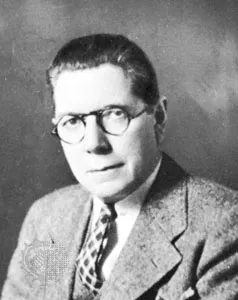
Raymond Pearl was not just a scientist. He was a statistician who decided biology needed better math. Born in Farmington, New Hampshire, in 1879, he eventually became one of the founding fathers of biometry. This field applies statistical procedures to biological and medical problems. It is a discipline that still underpins modern research. But Pearl’s legacy is complicated by his early, deeply flawed views on human genetics.
He earned his Ph.D. in zoology from the University of Michigan in 1902. As an instructor there, he saw what others missed. Standard statistical tools could solve messy biological questions. He did not stop at theory. He took those methods into the real world.
From Farm Experiments to Food Administration
Pearl’s career moved quickly from academia to government service. He headed the biology department at the Maine Agricultural Experimental Station from 1907 to 1918. This was not just about counting leaves. It was about applying rigorous data analysis to agricultural yields.
Then came World War I. Pearl served as chief of the statistical division of the U.S. Food Administration between 1917 and 1919. He managed data on food supply and distribution. It was high-stakes work. The country needed to feed troops and civilians while managing scarce resources. Pearl’s statistical background proved essential.
After the war, Johns Hopkins University invited him to organize its department of medical statistics and biometry. He built that department from the ground up. He believed biology and human affairs were inseparable.
A Dangerous Detour into Eugenics
Here is where the story gets dark. From the early 1900s, Pearl supported the eugenics movement in the United States. This was common among scientists of his era. Eugenics promoted selective breeding to improve human traits. It was pseudoscience wrapped in the language of biology.
He denounced eugenics as scientifically ill-informed and prejudiced in 1925. Why the change? He realized the movement lacked rigor. It was driven by bias, not data. He turned his attention to more practical problems.
“The biggest problems of human reproduction lay in the high birth rate found in many nonindustrialized countries and in lower income groups within the industrialized world.”
This shift was significant. He stopped looking at “bloodlines” and started looking at poverty and development. He wrote extensively on this subject in the 1930s. He argued that birth rates were a function of socioeconomic conditions, not genetic superiority or inferiority.
Building Academic Foundations
Pearl did not just change his mind. He built institutions to support better science. He founded the Quarterly Review of Biology in 1926. Two years later, he launched Human Biology. These journals provided platforms for rigorous research.
He also wrote over 700 articles and books. His 1923 book, Introduction to Medical Biometry and Statistics, became a prototype for college texts. It taught a new generation how to use statistics in medicine. It set the standard for the field.
Pearl died in Hershey, Pennsylvania, on November 17, 1940. He left behind a field that relies on data, not dogma. He also