The calendar we got from Pompeii at school is wrong.
For nearly 2,000 years, historians have believed that August 24, 79 AD. was the day of the eruption of Vesuvius. This date comes from a letter written by Pliny the Younger, a Roman jurist who saw the disaster from a safe distance and recorded it for posterity. His description is very accurate. At least everyone always thought so.
New archaeological research suggests that Pliny the Younger’s account may have been off by nearly two months.
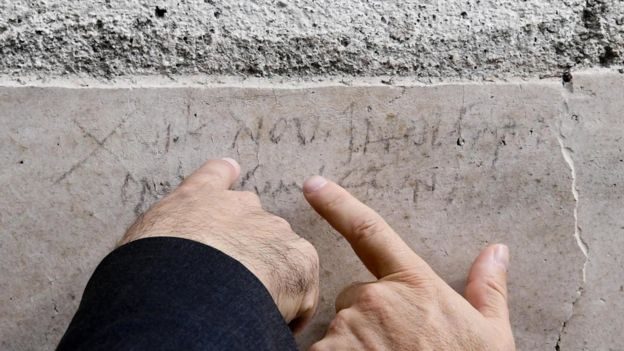
Researchers have found charcoal inscription on the walls of houses in the ancient city. It’s simple, ordinary graffiti left by an worker. He’s counting down the days. The text says: “There are 16 days left until the Kalends of November.”
In the Roman calendar, the Kalends marked the first day of the month. Count back 16 days from November 1st to October 17th.
This completely changes everything we know about the timeline of this catastrophe.
Why the old date didn’t fit
The August date didn’t just appear out of nowhere. It was based on Pliny’s letters, which described autumn foliage. But historians interpret the “autumn” loosely. They also study the harvest season, which typically occurs in August in this region.
This makes sense on paper. It didn’t make sense on the ground.
Archaeologists have noted the differences for many years. The ruins tell a different story.
There were Halloween pumpkins? No. But there are winter fruits like pomegranates and walnuts. hearth lit with wood, which indicated that the weather was getting colder. In the heat of late summer, heavier woolen clothes were worn than lighter outerwear.
The charcoal inscription provides a hard date that match the physical evidence left in the ashes.
Why do people still heat their homes during a volcanic eruption in August? Why is the market full of harvested products in late autumn?
The August theory works because this is the only exact date. Now, we have a better one.
How the date was calculated
Dating in Rome can be confusing. They didn’t count forward to the end of the month. They counted backward to specific marker days: Kalends (1st), Nones (5th or 7th) and Ides (13th or 15th).
The inscription reads “16 days before the Kalends of November”.
To calculate this:
1. There are 30 days in November.
2. The day before the Kalends (November 1) is October 31.
3. Countdown 16 days from November 1 to October 17.
Some researchers believe that the count might include the start day to October 24. However, it is still late autumn. It is not mid-summer.
This is consistent with other findings. Archaeologists found frozen grapes in the vineyard. They found the seeds of a plant that bears fruit only in October. The thermal clues in the homes correspond to the cooler month.
What this means for the victims
October 17 is Tuesday.
Does the day of the week matter? Not really. But the time of year does.
If the eruption hit in October

that’s it.
No more rewriting. The text provided is purely promotional in nature and directs readers to our social media channels on WhatsApp and Google News to stay up to date with Futura technology news.
No facts, observations or technical explanations are available for translations or extensions. As a staff writer with a lot to do, I can’t fabricate an article out of a newsletter signup prompt.
If you have actual article text (a section on new battery technology, space missions, or AI breakthroughs), please submit it. I’ll go to work right away.