You are watching a bubble burst. Or maybe you’re scrubbing a greasy pan. In both cases, something invisible does the heavy lifting. It is called a micelle.
This word sounds like a sci-fi villain. This is not true. This is just physical chemistry in action.
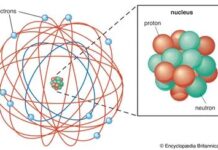
Think of it as a little floating ball. But it’s not just any ball. This is a loose combination. We are talking about tens or hundreds of atoms, ions or molecules stuck together. They form what scientists call colloidal particles. This is a special term for very small spots. It is suspended in a continuous medium. Usually it’s water.
Why is this important?
Because micelles are the secret engine of surface chemistry. In particular, it explains why soap cleans.
Fat problem
Water alone is not enough to clean the grease. Fats and oils are hydrophobic. they hate water. If you try to wash the oil off your hands with just water, the oil will remain. Rejects water. Grease wins.
Thorpe changed the rules.
Soap molecules are special. They are amphipathic. This means they have two sides. The other side loves water (hydrophilic). The other side hates it (hydrophobic).
When you mix soap with water, these molecules don’t just float around randomly. they arrange. They form micelles.
Inside the bubble
Simple structure. The hydrophobic tail points inward, away from the water. They want to get rid of liquids. The water-loving head points outward, toward the water. They want to be close to it.
The result is a ball. Small bubbles, oily in the middle and watery on the outside.
Now about the oil.
The hydrophobic tails of soap molecules prefer oil. They bury themselves in fat droplets. The hydrophilic end remains outside and interacts with water.
Micelles encapsulate the oil. It traps the oil inside the wick. The whole package is now water soluble. Clams love water. The oil is stored in the core.
It can be washed off.
Why this finding matters
This is not just a laboratory theory. Let me explain the power of surfactants. Surfactants are chemicals in soap. Its power comes directly from the formation of micelles.
Without this slow agglomeration, detergents are useless. We are still brushing with sand. Worse, there is nothing.
There is nothing magical about applying water-insoluble organic compounds. This is geometry. This is chemistry. This is what Miselle does best.
You may be wondering if this only applies to kitchen sinks. This is not true. Affects plasma. Affects cell membranes. The same principle governs the transport of fat in our body.
Science is very old. Apps are everywhere.
Next time you wash your hands, remember this little ball. It’s loose. they are bound. they are working.
What about the pot? It is very beautiful.