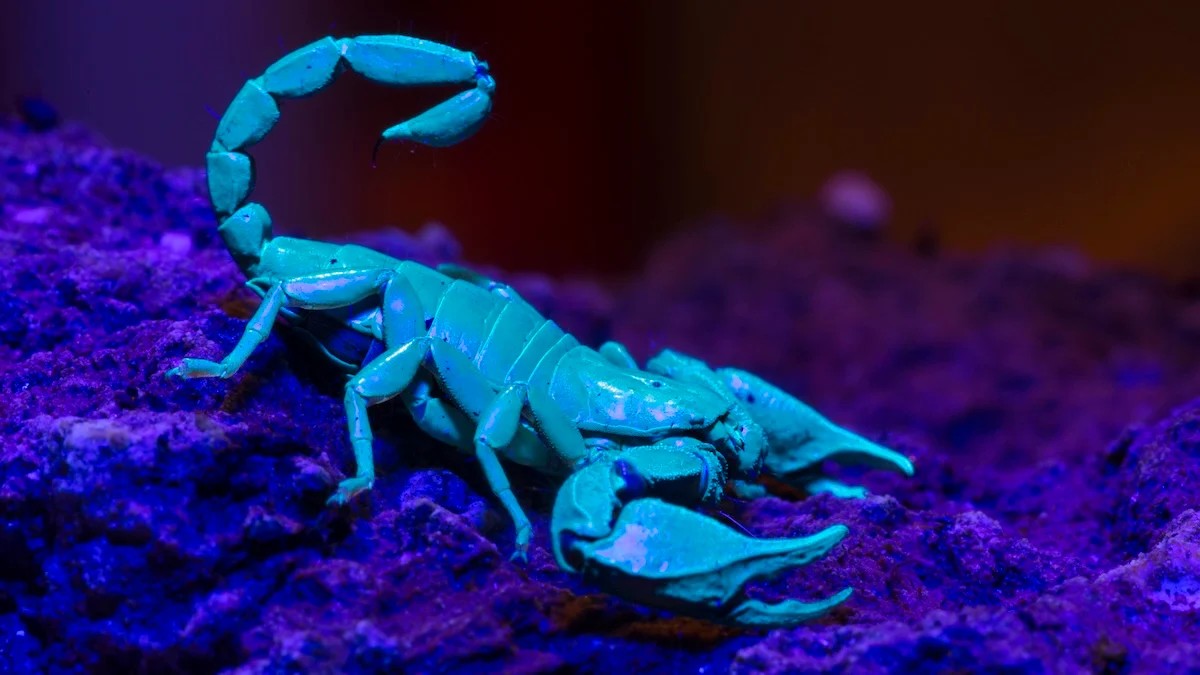
Scorpions possess some of the most specialized weaponry in the natural world, utilizing a combination of venomous stingers and powerful pincers. New research has revealed that these biological tools are not just made of chitin, but are strategically reinforced with heavy metals like zinc, iron, and manganese to optimize their performance.
The Chemistry of Combat
By using X-rays and electron microscopes to examine 18 different scorpion species, scientists have mapped exactly how these metals are distributed within their anatomy. The study found that metal placement is not random; it is a highly specialized form of biological engineering tailored to the specific function of the limb or stinger.
- The Stinger: Zinc tends to concentrate at the very tip of the stinger, while manganese is more prevalent further down the length of the tail.
- The Pincers: Zinc and iron are primarily found along the inner cutting edges, providing the structural integrity needed to grasp and crush prey without the tools breaking.
Interestingly, the research noted a “trade-off” system within individual species. A scorpion that invests heavily in metal-reinforced pincers typically has lower metal concentrations in its stinger, and vice versa. This suggests a biological “budget” where energy and resources are allocated to the most vital weapon for that specific species’ survival.
Form Follows Function: Specialized Survival Strategies
While all scorpions share a similar body plan, their evolutionary paths have led to vastly different combat styles. The distribution of metals reflects these diverse lifestyles:
The “Brute Force” Approach
The Opistophthalmus genus prioritizes physical strength over venom delivery. These scorpions possess massive, powerful pincers used for both digging burrows and crushing prey, while their stingers remain relatively weak. For them, the pincers are the primary tool for survival.
The “Venom First” Approach
In contrast, the Parabuthus genus (often called “thick-tailed scorpions”) focuses on rapid venom delivery. Because their stingers are their primary weapon, their pincers are relatively small and less robust, as they do not rely on crushing force to secure a meal.
A Surprising Discovery in Durability
One of the most unexpected findings of the study challenged the researchers’ initial hypothesis. It was assumed that larger, more powerful pincers would require higher concentrations of metal for hardness. However, the data showed the opposite: species with longer, thinner claws actually had higher levels of zinc enrichment.
This suggests that zinc serves a purpose beyond mere hardness. According to evolutionary biologist Sam Campbell, the metal likely provides durability and flexibility.
“Long claws need to grasp prey and prevent it from escaping before being injected by venom. This suggests an evolutionary relationship between how a weapon is used and the specific properties of the metal that reinforces it.”
Why This Matters
This discovery moves beyond the study of scorpions alone. It provides a blueprint for understanding how various arthropods—including spiders, ants, bees, and wasps—might use metallurgy to enhance their biological tools. By understanding how nature uses zinc, iron, and manganese to solve mechanical problems, scientists can gain deeper insights into the evolution of complex biological structures and perhaps even inspire new biomimetic materials in engineering.
Conclusion: By strategically embedding heavy metals into their anatomy, scorpions have evolved highly specialized, “engineered” weapons that are perfectly tuned to their specific hunting and defense strategies.