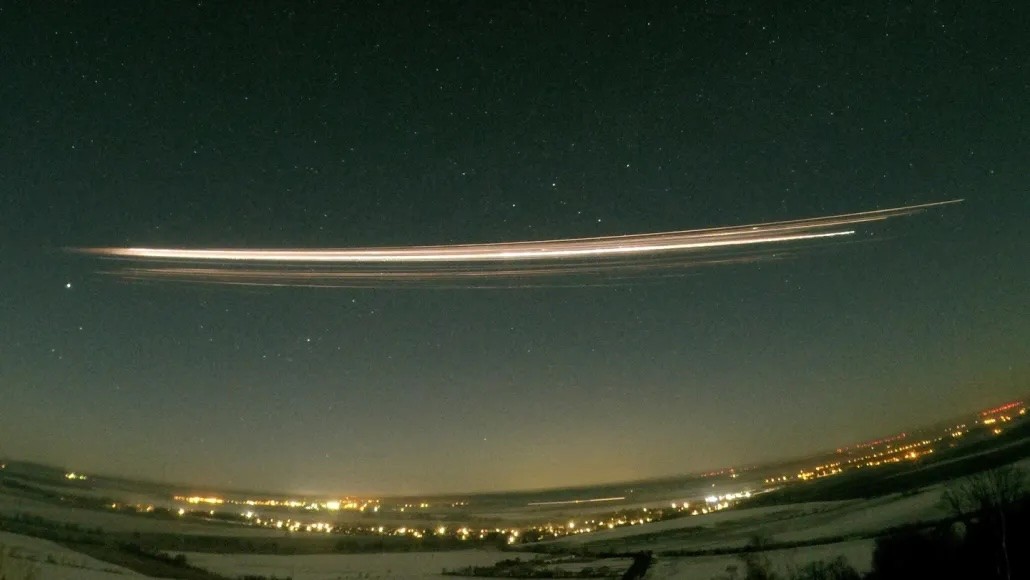
It wasn’t a storm. Wasn’t natural. Just a rocket coming home.
And when it hit the atmosphere it left behind more than fire and fear. It left dust. Fine metallic dust. Specifically, aluminum and copper and traces of lithium.
The invisible cloud
Atmospheric physicists don’t just look up. They measure.
They used lidar —that’s light detection and ranging, essentially a giant laser gun that shoots beams into the sky to map particles—plus air samplers to check what was floating around after the Starlink launches.
The results showed metal levels spiking significantly right after reentry events.
The plume of debris didn’t vanish. It spread out. Like smoke but heavier. More persistent.
You see, rockets use aluminum fuel. When that burns or burns up it sheds tiny particles. These contaminants get lofted into the stratosphere. That layer is 14 to 64 km up. High. Above most planes. Above most weather.
Why we should care
Most people think the atmosphere just… cleans itself.
It does. Slowly.
But if you keep pumping metals into that thin slice of sky does it add up? Maybe.
Climate science tells us the stratosphere matters. It holds the ozone layer which blocks ultraviolet radiation from the sun. Mess with that environment and you might mess with temperatures. Maybe change wind patterns. Maybe not.
That’s why computer models matter.
Scientists run simulations. They input the mass of the debris. Its density. The chemistry involved in these chemical reactions when metals hit oxygen high up.
Do these particles stay suspended? Yes. For years potentially.
Is that a pollutant? Technically yes. It’s unwanted matter in an environment where it shouldn’t be.
Who watches?
A team from the University of Leicester led this.
They aren’t alarmists. They’re meteorologists. People who study air and weather. They published their data so anyone with internet access can read it.
No paywalls. No corporate spin. Just raw stats on aluminum and copper concentrations in the sky after each launch.
They found higher density of metals in the air following specific reentry windows. Not everywhere. Just there. Like a shadow stretching across a continent.
It’s not over
We launch more satellites now than ever before. Thousands orbit Earth. Most burn up. Some don’t. Space debris is already a nightmare down low in orbit where active spacecraft fly. But high up? In the stratosphere? We’re barely thinking about it.
Is this an emergency? No.
Is it a blank check? Probably not.
But if you’ve ever wondered what those contrails mean at 2 a.m.? That’s not just ice crystals sometimes.
Check the logs.
See if there was a launch that day.
Then look at the data.