You watch a chef chop onions with terrifying speed. It’s impressive. Then you look at your own knife skills and sigh. Competitive shows like Top Chef or Iron Chef are thrilling but also demoralizing. They make your kitchen feel inadequate. Instructional cooking shows are different. They don’t just show off; they teach.
These programs blend entertainment with education. You watch for the host’s charm. You stay for the humor. Most importantly, you watch to see food that looks edible. Some shows change how you view prep entirely. They turn the kitchen from a storage space into a lab. A place for science. Innovation. Competence.
The Show That Made French Food Accessible
Before Julia Child, French cuisine was a distant dream for most Americans. It felt exclusive. Complicated. Untouchable. The French Chef changed that dynamic overnight.
The show didn’t just broadcast recipes. It demystified the entire process. Child’s personality was key. She wasn’t polished in the traditional TV sense. She made mistakes. On camera. In real time. When a sauce broke, she didn’t cut away. She fixed it. This transparency was revolutionary.
“The French Chef” transformed cooking from a daunting art into an approachable skill.
Viewers didn’t just learn to make coq au vin. They learned how to cook. They learned that butter could be a primary ingredient without judgment. They learned that technique mattered more than perfection.
Why It Still Matters for Home Chefs
Modern cooking shows often prioritize speed or aesthetic perfection. The French Chef prioritized understanding. Child explained the why behind the steps. Why whip the eggs slowly. Why sear the meat first. This context helps home cooks adapt. It stops them from just following instructions blindly.
The show’s longevity proves its value. It’s still referenced today. Not just for the recipes. But for the philosophy. Cooking as a skill to be honed. Not a talent you’re born with.
If you’ve ever felt intimidated by a recipe, this show offers a solution. It doesn’t promise instant mastery. It promises practice. And maybe a good laugh when things go wrong. Which they always do.
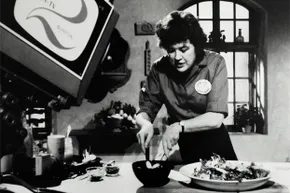
The Galloping Gourmet wasn’t exactly shy about his kitchen habits. Ernie Anderson, the host, didn’t just cook; he performed. And he performed with a volume that could shatter glass. If you were looking for a subtle, nuanced exploration of flavor profiles, you came to the wrong place. Anderson liked to shout. He liked to laugh. He liked to make a mess. It was a stark contrast to the earnest, butter-stained precision of Julia Child. Yet, both shows did the same thing. They brought professional cooking into the average American home. They made it look less like a laboratory and more like a party.
Why Ernie Anderson Shouted (And Why We Loved It)
You might wonder how a show where the host yells over his own voice became a hit. The answer lies in the energy. Anderson had a theatrical flair that felt fresh in the early 1960s. He wasn’t just reciting a recipe. He was selling a lifestyle. A loud, boisterous, meat-and-potatoes lifestyle. The show, The Galloping Gourmet, ran on ABC and later in syndication. It focused on simple, hearty dishes. Think roasts. Think stews. Think food that stuck to your ribs.
“I don’t care about the minutiae of culinary technique. I care about the joy of eating.”
That wasn’t a direct quote, but it was the spirit. Anderson believed that cooking should be fun. Loud. Unpretentious. While Julia Child was whispering secrets about French sauces, Ernie was shouting about the glory of a good roast beef. Both approaches worked. They proved there was no single “right” way to teach America how to cook.
The Contrast in Teaching Styles
Comparing The French Chef and The Galloping Gourmet is like comparing a classical sonata to a rock anthem. Julia’s kitchen was a workshop. It was about discipline. It was about respecting the ingredients. Ernie’s kitchen was a stage. It was about entertainment. It was about the crowd.
Viewers didn’t need to choose. They could watch Julia master a soufflé with trembling hands and then switch channels to watch Ernie decimate a chicken with a cleaver. Both hosts were authentic in their own ways. Julia admitted her mistakes. Ernie celebrated his chaos. Neither tried to be the other. And that diversity is why both shows survived. They filled different emotional needs for the home cook.
The Legacy of the “Gourmet”
Ernie Anderson died in 1974, but his brand remained. The name “Galloping Gourmet” was licensed for products and other media. It became a catchphrase for approachable, unpretentious cooking. It wasn’t about haute cuisine. It was about getting dinner on the table without losing your mind. Or your voice.
The show’s influence is still felt. Modern cooking shows often borrow from both extremes. The precision of Child and the personality of Anderson. We still want to see the mistake. We still want the host to have a point of view. Whether that view is shouted or whispered, it matters.
The recipes from The Galloping Gourmet are simpler than Julia’s. But they weren’t easy to execute with that level of enthusiasm. Anderson’s energy demanded attention. You couldn’t skim the headlines and understand the dish.
The Wine Jump and the End of an Era
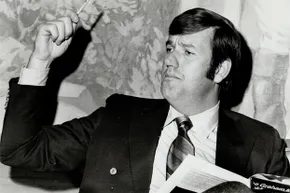
Forget the idea that his moniker came from culinary adventures across continents. The nickname was pure physics. Every time The Galloping Gourmet kicked off, Graham Kerr would sprint onto the set and hurdle a chair. The glass of wine in his hand stayed perfectly still. Nobody is sure if he taped plastic wrap over the rim or just had steady hands of steel, but the stunt defined the show’s vibe.
He wasn’t just throwing around butter and brandy. He was making complex dishes look like a party. His energy was infectious. Viewers learned to love fine dining because they couldn’t stop smiling at his antics. It was Ottawa-based television gold. The show ran globally from 1969 to 1971. His wife, Treena, produced the 195 episodes from behind the scenes. Then the truck hit their car.
The crash was brutal. Kerr was left paralyzed temporarily. Surgeons had to remove part of Treena’s lung. The series ended abruptly, not with a finale, but with a hospital bed. By 1975, he returned with Take Kerr. He kept the humor but addressed the viewer’s biggest pain points: time and money.
8: ‘The Frugal Gourmet’
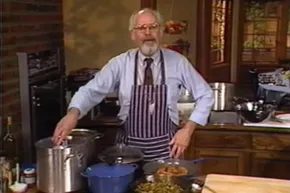
You don’t need a five-star kitchen to cook like a pro. That was the entire premise of Jeff Smith. He went by “The Frugal Gourmet” and proved it in style. The show launched in 1983. It ran on PBS for 14 years. It became a staple of public television. But the production side shifted in 1990. The show moved from public to private production. Smith didn’t just cook. He entertained. An animated cook, he wasn’t afraid to make mistakes on camera. He would mess up a sauce. Then he would keep moving. The show was taped, but the energy felt live. It was electric. At its peak, The Frugal Gourmet was the top-rated cooking show in the U.S. His cookbooks sold by the millions. They were bestsellers.
Then the sun went down. The series ended on a bad note in 1997. Seven men filed suits against Smith. They claimed he had sexually abused them years before. Smith maintained his innocence. He was never indicted. The lawsuits were settled out of court. There was no trial. Smith returned to the Seattle area. He died there in 2004. The end of his career was abrupt. It left a mark on the food world.
The Rise of Budget-Friendly Gourmet Cooking
Why did Jeff Smith resonate with so many people? It wasn’t just the recipes. It was the vibe. He made high-end food feel reachable. People wanted to eat well without going broke. That was the core of his appeal. The show’s format was unique. It wasn’t a stiff, formal demonstration. It was loose. It was fun. Smith would laugh at his own errors. He’d flip a pancake onto the floor. Then he’d start over. Viewers liked that authenticity. It felt real.
The transition to private production in 1990 didn’t change the show’s charm. If anything, it gave Smith more freedom. He could experiment more. The ratings climbed. The Frugal Gourmet became a household name. His books followed the same philosophy. Simple ingredients. Big flavors. No fancy equipment needed.
The Lawsuits and Legacy
The end of the show was complicated. Seven men accused Smith of past misconduct. The legal process was quiet. Smith was never indicted. The cases were settled. No public trial. No jury. Smith denied the allegations. He stayed silent in many ways. He left the spotlight. He went back to Seattle. He lived out his days there until his death in 2004.
The legacy of The Frugal Gourmet remains mixed. On one hand, he changed how people thought about cooking. He made gourmet accessible. On the other, the scandal tarnished his memory. It’s a complex story. One of success and controversy. The recipes are still around. The books are still sold. But the man himself is a figure of debate.
How The Frugal Gourmet Changed Home Cooking
Smith’s approach was different from his peers. Other chefs were serious. They were technical. Smith was playful. He taught people to cook with what they had. No need for expensive tools. No need for rare ingredients. This was a shift in the culinary landscape. It empowered home cooks. It showed that skill mattered more
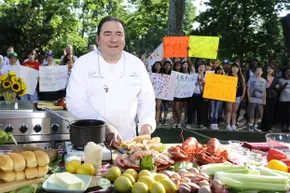
The Essence of Emeril
The draw wasn’t just the recipes. Sure, those spicy, exotic Creole and Cajun dishes pulled people in. But it was the chef himself. Emeril Lagasse ran a fast-paced show with an energy that felt almost electric. Born near Boston to a French Canadian father and Portuguese mother, he didn’t hide his working-class roots or his unusual heritage. He brought them right to the screen.
The series debuted in 1995. It ran on and off for 12 years, becoming a staple of cable cooking. In 1996, Time magazine actually named “The Essence of Emeril” one of the best 10 cooking shows on television. That’s not a typo. That’s a massive endorsement for a chef who shouted his way through his kitchen.
Recipes That Defied Categories
Lagasse didn’t stick to one lane. His recipes often defied categorization entirely. You had elegant dishes like surf-and-turf. Then there were sweet and savory crepes. These weren’t just meals; they were experiences.
But it wasn’t all fine dining. Some recipes were built for casual occasions. Summer entertaining? Covered. Football parties? He had you covered there too. Pure comfort foods made frequent appearances, too. Think his “kicked-up” meatloaf. Or his 5-bean chili. Beef stew, heavily seasoned.
And whenever he added spice, it was with his trademark exclamation: “Bam!”
It became a cultural moment. The seasoning wasn’t just flavor. It was a performance.
How ‘Good Eats’ Changed the Game
While Emeril was shouting over reduction sauces, another show was quietly changing how we understood food. ‘Good Eats’ didn’t just show you how to cook. It showed you why.
The host, Alton Brown, was a different beast entirely. Where Emeril relied on instinct and volume, Brown relied on science. He was a mechanical engineer turned chef. His approach was methodical. Analytical. Almost clinical.
This contrast highlighted two very different eras of television cooking. One was about passion. The other was about precision.
“Cooking is chemistry. And chemistry is fun if you know the elements.”
Alton Brown broke down ingredients like they were puzzles to be solved. He explained the Maillard reaction before most people knew what sautéing actually did to a steak. He used gadgets that looked like they belonged in a lab rather than a kitchen.
The show ran for 15 seasons. It taught a generation that food wasn’t magic. It was physics. And that was just as exciting as a shout of “Bam!”
The Lasting Impact of Two Styles
Looking back, it’s interesting how these two styles coexisted. They dominated the Food Network for years. Emeril brought the heat. Alton brought the heat map.
Emeril’s legacy is in the flavor profiles he popularized. Cajun and Creole cuisine moved from regional specialties to mainstream American staples because of his visibility. You see his influence in every “kicked-up” recipe at a backyard BBQ today.
Alton’s legacy is in the education. He made cooking accessible through understanding. People stopped guessing and started knowing. Why does bread rise?
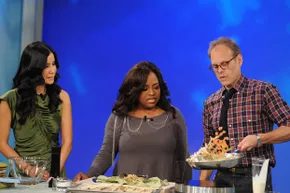
Cooking isn’t some mystical art reserved for a chosen few. “Good Eats,” which premiered in 1999 and lasted for 16 seasons, proved that. It ran on the idea that food is science. You get the best results by understanding why things happen and using the right tech to make them happen.
Alton Brown didn’t just toss ingredients in a pan. He explained the mechanics behind every move. Need to keep a turkey from drying out? He showed you. Wondering about unusual salt uses? Covered. Searing a steak? He broke down the sear. Biscuits? He tested leaveners. Roux? He chased smoothness.
Brown brought goofy energy to the screen. He was approachable. He used skits to teach chemistry. You wouldn’t see a giant onion on any other show. Or a life-sized gingerbread man. That blend of fun and facts made “Good Eats” a titan. It pulled in 20 million viewers a month. Why? Because watching real elves in trees explain cracker production is strangely compelling.
5: ‘America’s Test Kitchen’
It took a different approach to debunk the myth that cooking is intuitive magic. “America’s Test Kitchen” started its run with a similarly rigorous mindset. They didn’t just show you how to chop an onion. They tested 200 onions to find the sweet spot. They treated the kitchen like a lab.
The show’s host, usually a chef or a seasoned editor, stood behind a counter stacked with gadgets. They didn’t trust tradition. They trusted data. If a recipe said “bake at 350 degrees,” they tested 325. They tested 375. They tested every variable. The result was a recipe that worked every time. No guessing. No hoping.
Viewers tuned in for the consistency. The show proved that home cooks could achieve professional results. It wasn’t about innate talent. It was about process. And that process was accessible to anyone willing to follow the steps.
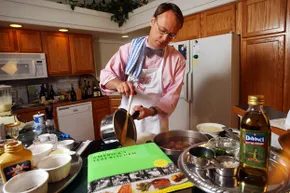
The Science Behind the Soggy Bottom
Most home cooks have stared into the abyss of a collapsed chocolate cake. Or perhaps they’ve wrestled with a steak that turned into shoe leather. The team behind America’s Test Kitchen exists to stop those disasters in their tracks. Their mission is simple: use the actual chemistry of cooking to create recipes that work every time. By 2014, the PBS series had already been on air for 14 years. They broke down everything from how brining changes meat texture to the specific chemical difference between baking soda and baking powder. They explained why fish sticks to the grill and which cutting board harbors more bacteria.
The show comes out of a 2,500-square-foot working kitchen near Boston. Over 30 full-time staff members develop and test recipes dozens of times before they ever hit the screen. It is rigorous. It is scientific. And it is exactly why your oven-baked bread doesn’t turn out like theirs.
Real Time, Real Budgets, Real Results
Then there was Rachael Ray. She came in hot on the Food Network with 30 Minute Meals. The premise was brutally straightforward: cook dinner in half an hour. No shortcuts. No time-lapse editing tricks. Ray demonstrated these recipes live, proving the time limit was real. Her energy was high. Her confidence was higher.
The show ran from 2000 to 2012. It focused on simple dishes and common ingredients. Sometimes, it even embraced store-bought shortcuts. Why make cornbread from scratch when a box mix works fine? You save time for the rest of the meal. Ray covered every angle. Need low-calorie options? She had them. Want kid-friendly food? She had homemade takeout clones. Hosting a tailgate? She had answers. Even the classic American burger got a Ray-style makeover.
The Barefoot Contessa Difference
This brings us to Ina Garten.
While Ray was rushing against the clock, Ina Garten was taking her time. Her show, Barefoot Contessa, offered a different kind of comfort. It wasn’t about speed. It was about quality ingredients and elegant, approachable recipes. She didn’t need to justify a box mix because her pantry was stocked with high-end staples. The contrast between Ray’s frantic efficiency and Garten’s leisurely elegance defined two major eras of cooking television. One was for the busy parent. The other was for the host who wanted to impress without breaking a sweat.
The shift in viewer habits followed suit. People stopped watching for tricks. They started watching for inspiration.
The Evolution of Home Cooking TV
What happened next was predictable. The audience got smarter. They wanted to know why a recipe worked, not just how to make it fast. America’s Test Kitchen filled that gap. They provided the answers. Ray provided the confidence. Garten provided the aspiration.
Together, they changed how we think about food in our own kitchens. We stopped following instructions blindly. We started asking questions. Why does this happen? How does that ingredient interact with that heat source? The answers were no longer hidden behind closed doors in a test kitchen or a celebrity’s private pantry. They were out in the open. On screens. In our homes.
It wasn’t always

If the mere thought of hosting makes you want to hide in your pantry, Ina Garten is here to help. Known as the Barefoot Contessa, she has spent years proving that you don’t need a catering budget to throw a good party. Her show is basically a masterclass in lowering your blood pressure while upping your social success. It’s been a Food Network fixture since 2002, and the message is always the same: keep it simple.
Her path to stardom was never the standard Hollywood route. Before she was flipping burgers and whipping up beignets for TV, she was a nuclear energy budget analyst for the Carter administration. Yeah, you read that right. Nuclear energy. It’s a far cry from the culinary world, but it probably helped with the logistics. In 1978, she pivoted hard, opening a specialty food store called The Barefoot Contessa. The name stuck. The store worked. Then came the cookbooks. Then the Emmy-winning show.
Now, she’s dishing out specific advice for every social scenario you can imagine. Need to throw a cocktail party for a crowd? She’s got you. Housewarming? Covered. Want to tackle French cooking without losing your mind? She simplifies it. Even potlucks get the Ina treatment. Her mantra is essentially: relax. It’s all doable if you stop overthinking it.
Lidia’s Italy
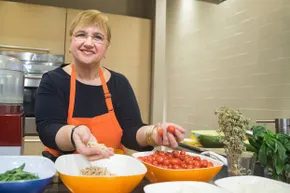
9. ‘Lidia’s Italy’
Bad ingredients ruin everything. A bland pasta. A fishy-tasting fish fillet. You can’t fix that with sauce. You have to start with the raw material. That is the core philosophy of Lidia Bastianich on PBS’s Lidia’s Italy. She doesn’t just cook. She teaches you how to pick the right stuff. And then she shows you how to handle it.
Bastianich runs four restaurants in New York City. The calm, practical demeanor she projects on screen isn’t an act. It’s experience. She’s written books. Hosted other shows. She has seen every kitchen disaster imaginable and knows exactly how to talk a viewer through it.
The show started in 2007. It covers a lot of ground. Literally. You get recipes from across Italy. She explores wine pairings. She digs into chocolate recipes. She highlights fontina cheese. She makes fresh pasta from scratch. It is not just about the final plate. It is about the journey to get there.
Before she starts chopping, Lidia often goes to the source. She visits wine producers. She tracks down prosciutto makers. She wants you to see where the food comes from. This isn’t just scenery. It informs the cooking. When she returns to the kitchen, the prep is designed for you. The steps are clear. You can cook right along with her. She makes it feel like she is standing in your kitchen. Not in hers.
It is a practical approach to cooking. It strips away the pretension. It leaves you with skills you can actually use.
1: ‘Martha Stewart’s Cooking School’
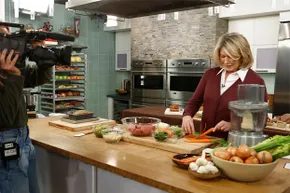
The Classroom Approach
Martha Stewart’s Cooking School isn’t exactly a TV show in the traditional sense. It’s a culinary class that happens to be broadcast on PBS. Stewart operates in a way that is simple, calm, and direct. This style forces you to focus on technique rather than personality. The series prioritizes information over the entertainment value found in some of her earlier productions. You get suggestions rooted in her kitchen experience alongside explanations of the science behind recipes.
Real-Time Techniques
The fourth season launched in October 2014. It dives deep into everything from basic skills to classic methods. The show covers roasting, poaching, braising, and blanching. A key feature is that many segments are filmed in real time. This gives viewers an accurate sense of how long processes actually take. Stewart returns the cooking show format to what it should be: actual cooking.