


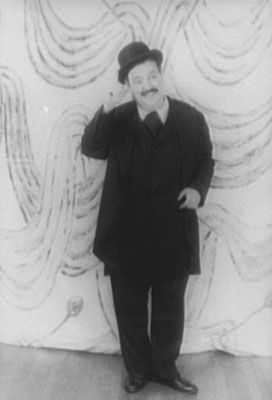
Born in Brooklyn on February 28, 1915, Zero Mostel was more than just a comedian. He was a force of nature. Singer, artist and expressive actor, he brings a fierce physical intensity to every role. Although he has appeared in films and television, his legacy is cemented in the theater. He died on September 8, 1977 in Philadelphia. However, his influence on stage comedy is undeniable.
Mostel grew up splitting his time between New York and Connecticut. He wanted to be an artist from the beginning. He graduated from the City College of New York in 1935 and later studied art at New York University. For a while he tried to become a serious painter. He taught art. He gave lectures at museums. These lectures are not boring academic lectures. They were entertaining. People invited him to perform at parties. In 1942, he debuted in a nightclub.
That same year, he made his Broadway debut in Cafe Crown This is a comedy. It got him noticed. He started working in radio. He landed his first film role in 1943 in “Du Barry Was a Lady”.
World War II interrupted his momentum. He served in the army. When he came back, acting jobs came one after another. In 1945, he appeared in a Broadway concert program. Then Beggar’s Holiday ran from 1946 to 1947. He also tried dramatic film roles. He played a villain in Elia Kazan’s Panic in the Streets (1950). He appeared in The Enforcer and Scirocco (both 1951). In 1952, he appeared again on Broadway in the play “Exodus to Egypt” directed by Kazan.
Then everything stopped.
His support for the leftist causes sparked rumors. The House Un-American Activities Committee called him in 1955, but he refused to cooperate. This refusal led to him being blacklisted from Hollywood. He can no longer work in movies or mainstream television.
However, theater, however, remained open.
In 1958, he won an Obie Award for his role as Leopold Bloom in Ulysses in Nighttown This is an off-Broadway show based on the book by James Joyce. In 1961, he played a man turning into a rhinoceros in Eugène Ionesco’s Rhinoceros on Broadway. This performance earned him his first Tony Award.
The following year, he starred in “A Funny Thing Happened on the Way to the Forum.” This is a musical comedy. He won a second Tony Award.
But his biggest break came in 1964 when he created the character of Tevye in Fiddler on the Roof. It was an indelible performance. He won his third Tony Award. The actors who played Tevye after him imitated his gestures. They study his timing. Mostel didn’t just fill the role; he owns it.
“Mostel’s greatest triumph was his unforgettable role as Tevye in 1964’s Fiddler on the Roof.”
Why is his work still important? Because he brings a raw human vulnerability to comedy that few can match. He wasn’t just making people laugh. He showed pain beneath the joke.
Is he back in Hollywood? Not really. The blacklist haunted him. But on stage he was king. His physical comedy. His emotional range. It changed how we see stage acting.
He died in 1977. The reviews of Fiddler still stand. The Tony Awards still sit on shelves. The blacklist is gone. But the performances remain.
What happens to an artist when the system tries to silence him? He continues to work. He is constantly changing. He keeps turning into rhinos.
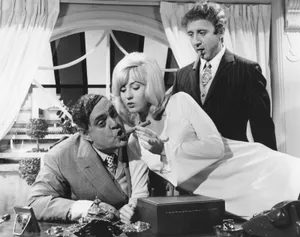

Zero Mostel didn’t hang up his boots even after winning the stage. His return to Hollywood began in 1966 with the film adaptation of A Funny Thing Happened on the Way to the Forum. But which role cemented his legacy? This is Max Bialystock in Mel Brooks’ The Producers (1968).
This performance remains his most iconic screen scene. He plays an amoral theater producer with a chaotic energy that is dangerous and funny at the same time. It fits perfectly with his ability to turn greed into comedy.
The Comedy and Tragedy of His Filmography
Although Mostel has his favorite tricks, he’s not a one-trick pony. He continued to work after “The Producers”. Appeared in “The Great Bank Robbery” (1969) and “Once Upon a Scoundrel” (1973). This was followed by the 1974 Rhinoceros. Each character shows a different side.
But not all his screen work was lighthearted. In 1976, he underwent a major transformation in “The Front”. This film tells the dark history of the Hollywood blacklist. Mostel played a central role in this dramatic production. This proves that he can handle gravity with the same intensity he brought to farce.
Returning to Broadway and Artistic Roots
While making films, Mostel did not forget his theater roots. He returned to Broadway for a revival. In 1974, he starred in Ulysses in Nighttown. He then reprized the role in Fiddler on the Roof from 1976 to 1977.
These stages feel like home. The lights, the audience, the immediate feedback, that’s where he thrives.
“His best-known film role was as the amoral Max Bialystock in Mel Brooks’ comedy The Producers (1968).”
More Than Acting
Despite his schedule and the spotlight, Mostel continued to paint. Art has been a constant throughout his career. This is not a hobby to kill time. This is a parallel practice. It was a way to channel the same creative urges that fueled his performances.
He kept moving. He kept creating. The number of film appearances continues to grow, the number of plays continues to grow, and the number of paintings continues to grow. There is no slowdown. Just a steady, relentless drive to make something new. Where does this energy come from? It’s hard to say. It just was.