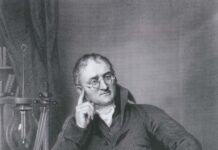
Henry Mosley changed chemistry forever. He was only 27 years old when he died.
He did not live to know the full impact of his work. However, his work in later years showed that the periodic table was based on a fundamental misunderstanding. Before Mosley, scientists arranged elements according to their atomic weight. It’s very messy. This is wrong.
Mosley showed that the true identity of an element is its atomic number. The number of protons in the nucleus determines everything. It’s not about weight. It is not an isotope. Period.
This is not just a theory. This has been experimentally proven.
The rise of Manchester
Mosley studied at Oxford University. He then moved to Manchester.
He worked for Ernest Rutherford. The lab was full of energy. Physics is moving from abstract speculation to rigorous measurement. Mosley first focused on radioactivity. beta rays radium.
Then he switched gears.
He began to study X-ray spectroscopy. He bombards the elements with electrons. He measured the x-rays emitted. The frequency is specific. Predictable.
He found a pattern. The frequency of these X-rays is proportional to the square of the integer.
This is Mosley’s Law.
“The frequency is proportional to the square of the integer, which is the atomic number plus a constant.”
This is a simple equation. It had a huge impact.
Atomic number and atomic weight
Before 1913, the periodic table was a guess. Some elements are not ordered by weight. Argon is heavier than potassium. However, potassium is more reactive. This makes no sense.
Mosley’s data makes this clear.
When the elements are arranged in atomic number order, these properties are perfectly aligned. Chemical behavior follows proton counting. The weight is just extra luggage.
Mosley also defined the true atomic number. It is the number of positive charges in the nucleus of an atom. This confirmed the core model. Rutherford proposed the atomic nucleus. Mosley numbered it.
He found a straight line.
He knew that there were three elements missing between aluminum and gold. Atomic numbers 43, 61, 75.
Technetium Promethium Rhenium
He missed one thing. Hafnium Others have claimed it wrong. Mosley didn’t know. But he was right about the others. These elements were discovered later. These characteristics matched his predictions.
The cost of progress
Mosley enlisted in the army to fight in the First World War.
There was no need for that. He could have stayed in the lab. But he joined the army.
In 1915 he was at Gallipoli. Turkey.
He was shot dead by a Turkish sniper. The bullet hit him in the head.
He died on August 10, 1915.
The losses are huge. Mosley was only 27 years old. He solved a problem that had puzzled scientists for decades. He organized the periodic table.
Einstein wrote about him. Other physicists also expressed their respect.
How much more could he have found if he were still alive? we’ll never know.
His work endures. A periodic system is arranged