The White House Was Just a Suggestion
Happy birthday. Three decades of alien lasers and patriotic fervor.
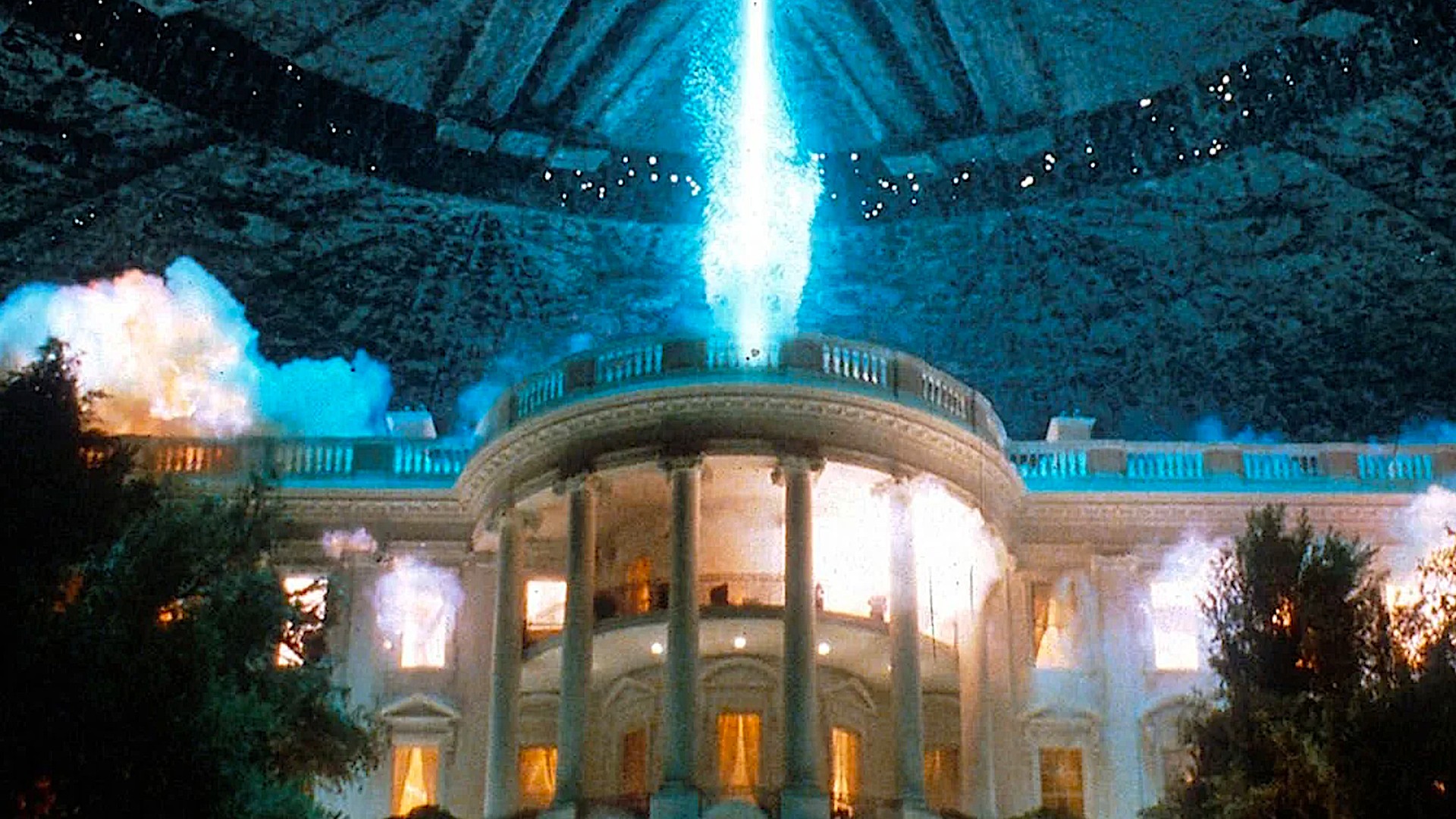
“Independence Day” changed how blockbusters are sold. Not just how they’re watched, but how they exist before the credits roll. You look back at the marketing now? It seems small. But in 1996 it was a sledgehammer. A city-sized saucer looming over D.C. Then boom. Gone.
“Roland and I had frustrations with our previous film. When this script came out, nine studios bid. We demanded control.” — Dean Devlin
They wanted real control. Emmerich wanted one specific image. The White House exploding.
Fox hesitated. They worried. It’s sensitive. Terrorists hit a federal building recently. Is blowing up the presidency okay? Devlin told them aliens aren’t terrorists. Emmerich turned the fear into a weapon. If they stop us, the controversy sells the movie.
Smart? Ruthless. Both.
Waiting in Line Was Real
Super Bowl Sunday. January 1996. Thirty seconds.
That’s all they showed. But it sparked something. Long lines around city blocks. People stood outside theaters for hours. We forget what that feels like now. You just stream it. Then you bought a ticket and stood in the sun.
It made sense for summer. Fourth of July week. Bill Clinton was President. Jordan’s Bulls were kings. Atlanta hosted the Olympics. The country was buzzing. ID4 rode that wave. $817 million worldwide. Top grossing film of the year.
Fox secretly tested trailers. One had the White House. One didn’t. The explosion version tested higher. They kept it. It remains one of the highest-rated teasers in history.
The film itself? Pure ‘50s energy. Think The War of the Worlds or Earth vs. the Flying Sauceners. Miniatures. Practical models. Not just CGI paste. Patrick Tatopoulos designed monsters that felt heavy. David Arnold wrote a score that actually swelled.
Emmerich thinks the craft died somewhere. He looks at recent expensive movies like Project Hail Mary and sees confusion.
“One actor and a stone puppet? Where did the art go?”
He argues films used to have value for a price. ID4 delivered. It won an Oscar for Volker Engel’s VFX team. Earned respect.
The Gamble on “Nobodies”
Hollywood loves stars. Back then, the studio didn’t trust them on Will Smith. Or Jeff Goldblum.
Smith was an up-and-comer. Goldblum? A cult favorite with weird eyes. Fox wanted safer names. Emmerich fought back. They mixed rising talent with seasoned character actors. Judd Hirsch. Randy Quaid. Margaret Colin. It felt eclectic. Risky.
The marketing leaned into the uncertainty. Helicopters flying banners reading THE WORLD ENDS JULY 4TH.
Emmerich hid in Puerto Vallarta while the film opened in 2,900+ venues. He wanted no pressure. Devlin drove to Westwood to film the lines for him. The queue stretched three blocks. Who was third in line? Director Jon Turteltaub.
His movie, Phenomenon, opened across the street on the same day. Turteltaub wasn’t promoting his own film. He wanted to see ID4.
“I jumped out and asked him why. He said this was the one he wanted.”
That’s the moment Devlin knew. It wasn’t a release. It was an event.
Why It Couldn’t Happen Now
The magic happened before the numbers ruled everything.
Digital projections didn’t exist yet. Test audiences didn’t know what movie they’d watch. Devlin describes sitting in the back of a Las Vegas theater. Lights dim. Independence Day appears. The crowd goes wild. Cheering before the plot starts.
Devlin and Emmerich looked at each other. This is huge.
Then he looks at modern studios. Committees decide greenlights. Algorithms guess success. Human instinct got replaced by data models.
Tom Jacobson, head of Fox back then, liked the script. His lieutenants disagreed. One loved it. One hated it. Jacobson overruled them. We make it.
You can’t do that today. The risk tolerance vanished. Originality requires someone to say I believe instead of the chart says.
A Partnership, A Blowout
Emmerich and Devlin wrote the script together. Fast. Hard.
Warner Bros was making Tim Burton’s Mars Attacks. They had six weeks before Burton’s quirky alien film dropped. Devlin sent their script out on a Wednesday. Producers cancelled lunches. The bidding war was instant.
Mars Attacks opened to decent reviews but got crushed financially by the sheer force of ID4. Burton was devastated. His cool, strange movie lost the audience war to straightforward patriotism.
It wasn’t unfair. It was market reality. ID4 gave people a villain they could punch. Mars Attacks gave them jokes. In the summer of ’96, people wanted punches.
Thirty years later does it hold up? Sure. It’s loud. It’s messy. It’s unapologetic.
The ending is simple. Earth fights back. We survive. You root for it. You scream at the screen when the wormhole trap works. It feels earned even if it’s cheesy.
We miss the noise sometimes. The lines. The uncertainty. The belief that one man with a pen could blow up the White House and everyone would buy a ticket anyway.