A prehistoric turn
A 505-million-year-old fossil tells us something surprising about a creature called Spriggina. It preferred turning right. Not just occasionally. Consistently. This might be the oldest known sign of handedness in history.
The animal didn’t have hands. Limbs are a luxury Spriggina never afforded. So when we talk about “right-handedness” here, we aren’t talking about dominant arms. We are talking about a neurological bias. A tendency to favor one side of the body over another.
That preference is complex. It implies an advanced nervous system was at work long before anyone expected it to appear.
Mirror images and storm traps
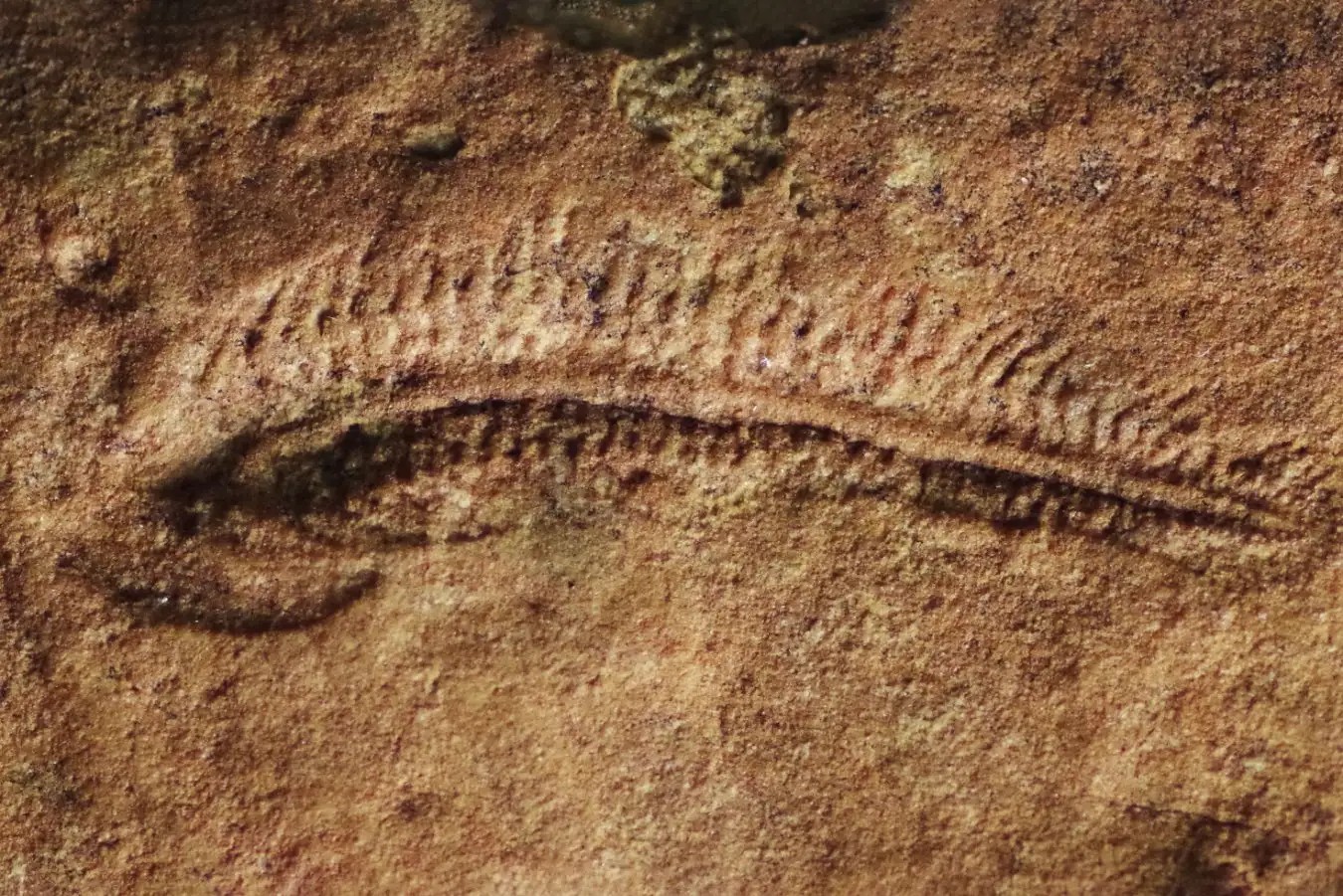
Scott Evans at the American Museum Natural History and his team looked at 100 fossils of Spriggina floundersi. These finds came from South Australia, gathered over decades of digging. They represent life during the Ediacaran period. This era precedes the famous Cambrian explosion.
Before this study, scientists assumed this kind of directional preference emerged during the Cambrian. That window opens about 541 million years after. These fossils rewrite the timeline.
Spriggina lived in shallow oceans. It foraged near the seafloor. To move, it wriggled. Like an inchworm, but simpler.
Evans noted something specific in the rocks. About 50 specimens showed clear bends in their bodies. The fossil record is tricky here because it acts as a mirror image. Storms buried the creatures in sand. The impression in the stone is reversed relative to the animal itself.
So, when Evans sees a fossil bending to the left in the rock… that means the live animal was bending to the right.
Two-thirds of those bent specimens showed this rightward curve.
Statistical significance or coincidence?
“This appears to be statistically significant.” — Scott Evans
He notes the numbers match modern biological findings on handedness. Some specimens even show multiple bends, switching from side to side. This suggests flexibility. The animal could turn either way if needed. Sticking to one direction might mean getting stuck in circles. Nature avoids that trap.
But was there true left-handed Spriggina? Hard to say.
Evans compares it to photographing 100 people waving. Most use their right hand. You can count the right-side waves. You can’t necessarily determine the internal wiring of the individual. You know the group trend. The individual outlier? Often lost in the data.
Building blocks, not miracles
This finding changes how we view the Ediacaran.
We often see that time as a gap. A quiet pause before the loud bang of the Cambrian. But Spriggina suggests otherwise. The fundamentals were already in place. Bilateral symmetry. Mobility. Handedness.
These weren’t Cambrian inventions. They were Ediacarian tools. The creatures that later exploded in diversity didn’t pull legs or symmetry from thin air. They built on what Spriggina and its kin had already figured out.
The Cambrian wasn’t a magical appearance. It was a refinement. An upgrade to an existing system.
Russell Bicknell at Flinders agrees. Finding functional asymmetry this far back gives us a anchor. It tells us when these behaviors took root. Deep. Much deeper than we thought.
Did they wave back?
We know Spriggina bent. We know it had a bias.
Did it know it had a bias? Probably not. It was just surviving. Writhing through mud. Turning right. Maybe turning left when necessary.
The fossils preserve the motion. The intent? Lost.
What other hidden preferences lie buried in the rock?