Forget the noise for a second. This is actually good news. Astronomers have found something rare. The very first atmosphere detected on a rocky, Earth-sized planet. One sitting squarely in its star’s habitable zone. It feels surreal to the researchers who did it. Collin Cherubim calls it “super exciting.” I’d agree.
The box ticker
Here’s what makes this matter. We’ve been looking for planets like home. Not just any rock. A rock that could hold water. That sits at the right distance from its star. That actually has an atmosphere to speak of. Most exoplanets fail this test early on. They are too hot. Too cold. Too bare.
LHS 1140b checks every box.
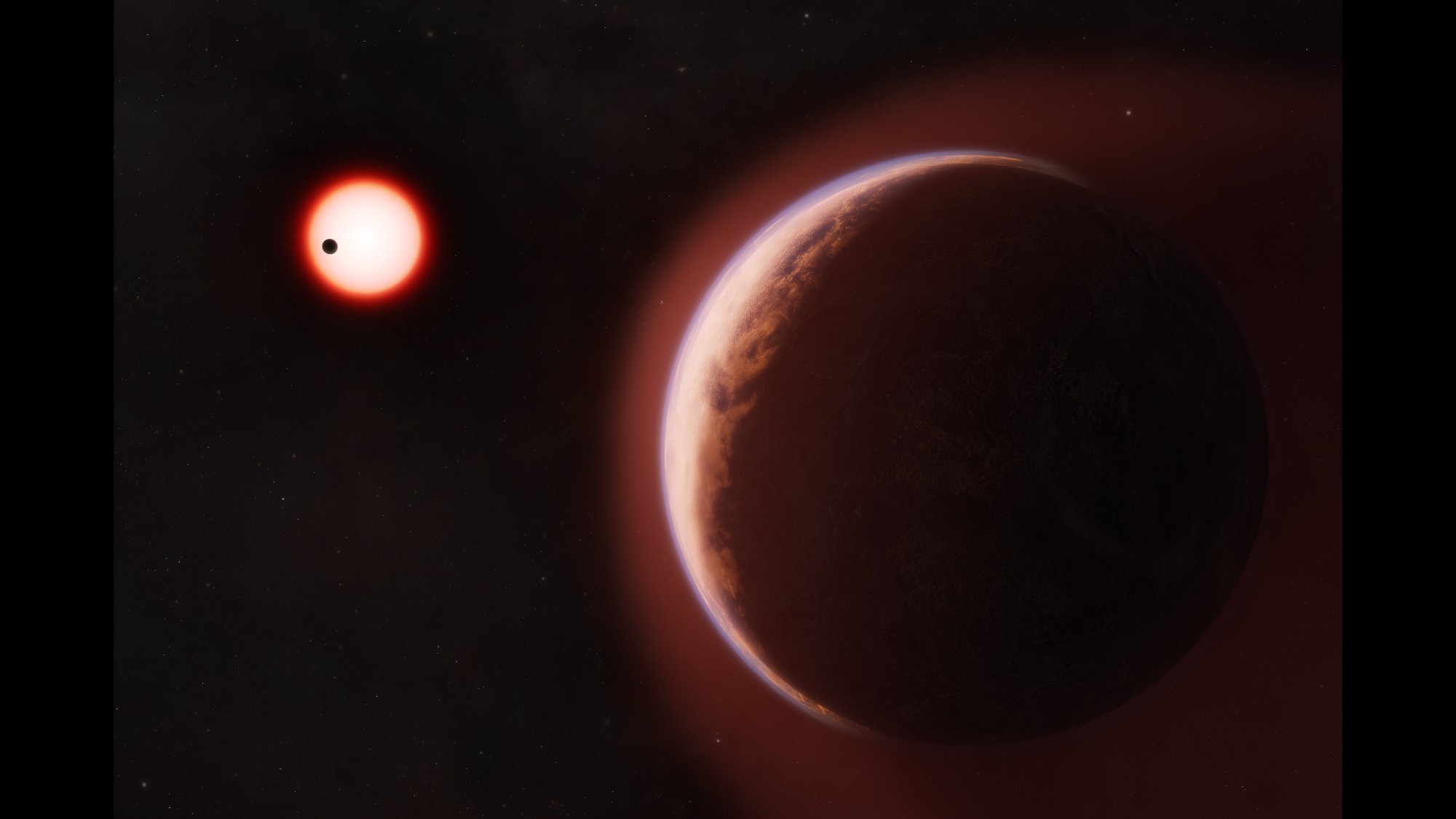
It’s 48 light-years away. It’s rocky. It’s in the “Goldilocks” zone where liquid water doesn’t boil away or freeze solid. And yes. It has air. Specifically helium. Detected directly. This hasn’t happened before. Not for a rocky planet.
“It feels kind of surreal,” lead author Collin Cherubim told Space.com. He just earned his PhD from Harvard. Now he’s pointing a telescope at a world 48 light-years distant and finding gas where others saw none.
The planet orbits a red dwarf. Small. Cooler than our sun. But closer than we are to ours. Jason Dittman, who helped discover the planet nearly a decade ago, put it plainly.
“We’re slowly narrowing the gap and checking these box es… we’re finding a planet that’s rocky… of the right temperature and now… okay, we finally found one that’s has an atmosphere.”
Ten years of waiting. Ten years of staring into the dark. Now we know there’s a surface made of rocks. Likely an iron core. And an envelope of gas that traps heat.
Is it Earth? No. Is it Earth-like? In two ways, yes. Composition and temperature. That’s enough for some people to start dreaming.
Why it’s surprising
Red dwarfs are the most common stars in the galaxy. They live long. But they’re temperamental. Younger red dwarfs spit out violent bursts of radiation. Solar flares. Coronal mass ejections. Stuff that should strip a planet bare. Like a sandblaster on a soap bubble.
For a long time, astronomers assumed rocky worlds around these stars couldn’t hold onto atmospheres. The radiation wins. Always.
LHS 1140 proves them wrong. At least partially. The planet has retained its atmosphere for billions of years. It survived.
“It’s showing that at least this rock y planet has retained an atmosphere… a bona fide, robust way saying yes atmospheres can survive.”
The star is old now. Six billion years. The worst radiation phase is over. Some helium escapes. Slowly. Earth’s helium escapes too. But most stays put. Dittman says the planet likely kept a good chunk of its initial air. Maybe water vapor is there too. Hard to say. Helium was just the first sign we caught.
Theory meets reality
This didn’t happen by accident. Cherubim predicted it. Years ago. While a grad student.
He built a model. From scratch. First principles. No shortcuts. He calculated that a rocky exoplanet should have a detectable atmosphere under the right conditions. Specifically this one. Then he did something weird. Used a technique usually reserved for gas giants on a small, rocky world.
No one else was doing it. He was skeptical. But curious.
He took that theory to Chile. To the Magellan Observatory. Used the WINERED Spectrograph. Watched the planet pass in front of its star. Along with another planet in the system. Both transited same night.
One planet showed nothing. A blank slate.
The other. LHS 114b. Showed helium.
Direct detection. Unambiguous.
“It was really nice to kind of close whole loop of the scientific method.”
Prediction. Test. Result. Match.
Science works like that. When it works.
The big question
Rocky planet? Check. Atmosphere? Check. Habitable zone? Check.
Does that mean aliens?
Please. Slow down.
Cherubim is clear. “I’m not claiming this planet has life.” Don’t put words in his mouth.
We don’t know what else is in that air. Nitrogen? Oxygen? Carbon dioxide? Water vapor? The helium tells us an atmosphere exists. It tells us the planet can hold onto gas against the star’s wrath. That’s step one. Step two—looking for life—is years away. Decades. Maybe never.
But this changes the board. It proves rocky worlds can wear clothes. That they aren’t just barren asteroids drifting through the cold. That the conditions for life as we know it can exist beyond Earth.
We are closer now. To a habitable rock. To an answer.
But not there yet.