Dorset’s most infamous resident is fading. Again.
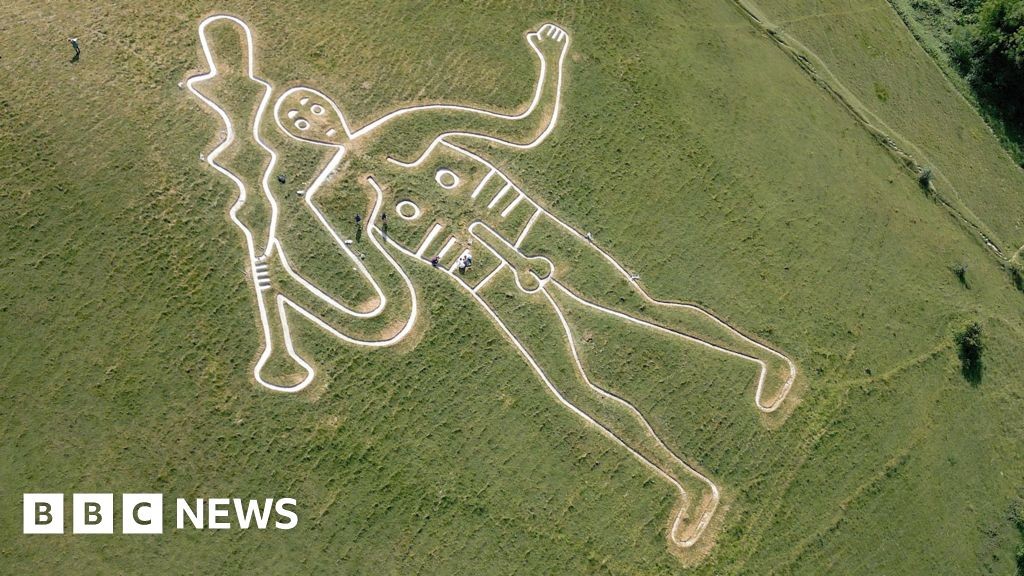
The Cerne Abbas Giant —that fifty-five-meter-tall naked chap holding a club—is etched into a hillside that gets battered by every storm we can’t ignore. He’s one of those things everyone knows, instantly. A silhouette that refuses to be subtle. But keeping him crisp is getting harder.
The National Trust owns the site. They’re the ones packing tonnes of fresh chalk into his outline this week. Just to make sure he stays white. And visible.
Luke Dawson is a ranger there. He knows the dirt. Or the chalk, as the case may be. He says the winter rains are heavier now. They wash the white dust straight off the slope before the summer sun has a chance to set it. Meanwhile, mild, damp conditions let algae run wild.
It’s a dulling effect.
“It’s one of these things we cannotreally prove,” Dawson admits. “It is more just observation of whatwe are seeing upthere.”
Sounds scientific enough, doesn’t it? It isn’t really. It’s just wet weather wearing things down.
The charity has tended the Giant since 1920. The routine is simple: re-chalk the figure roughly every decade to fight off weeds and erosion. Use sheep to keep the grass trim when you’re not digging in limestone powder. Simple.
Or it was.
Now, the Trust argues that the weather has thrown a wrench in that rhythm. Winter floods strip the chalk away faster. Then comes the dry spell. The grass stops growing, leaving the chalk edges bare. Exposed. Vulnerable. It erodes quicker.
Let’s get real for a second. The world is about 1.4°C warmer than it was in the late 19th Century. Mostly because we liked burning fossil fuels a little too much. The Met Office says the UK’s climate is already nothing like it was a few decades back. Expect hotter summers. Wet winters. The pattern isn’t going to break.
A new report dropped on Thursday. It says there’s a ninety percent chance the world sees a new temperature record in the next five years.
What does that mean for the big guy? He might need work more often than every ten years.
So they’re getting to work. The rechalking project could take 15 days. Around 300 people —staff and volunteers—will haul roughly 17 tonnes of chalk up a slope that grades one in three in some places.
Steep. Heavy. Brutal.
They did this in recent heatwaves, which feels almost poetic in its misery. They dig out the old stuff. Pack the new stuff in by hand. A process that hasn’t changed in generations, except the guys doing it are sweating more than they used to.
Chole Baugh and Joe Ford were up on the left shin. They won a spot helping out via a lottery draw.
“We did not know it was goingtobe oneofthehottestdaysof theyear,” Baugh laughed, wiping grit from her brow. “It has really made methink of all the peoplethat have workedtodothis over hundredsofyears.”
Hard work for a giant phallic symbol. Seems fitting.
This isn’t just about the outline, though. Months ago, public donations raised £330,000. The Trust used that cash to buy 138 hectares of extra land around the site. More land. More protection.
That area holds chalk grassland that’s rich in species. It has archaeological records. It hosts rare wildlife. Specifically, the endangered Duke of Burgundy butterfly. Buying the land means the Trust can fix habitats. Improve access. Dig into research without selling the dirt off under them.
And the figure himself? Still mysterious. Still debated.
Is he a fertility idol? A Roman Hercules? A satirical jab at Oliver Cromwell? Local historian Ian Denness calls him a “real ding-dong,” which is about the most honest description anyone has given.
Science doesn’t care for the satire angle, really. A 2021 study by the Trust suggested he wasn’t ancient. Not really. Sediment analysis points to the late Saxon period, between 700 and 1170 AD. Latecomer to the hill. Much later than prehistory. Much later than Rome.
He’s not a relic of the deep past. He’s medieval. And now, he’s fighting modern weather.
The chalk is fresh today. Tomorrow? Maybe not so much.