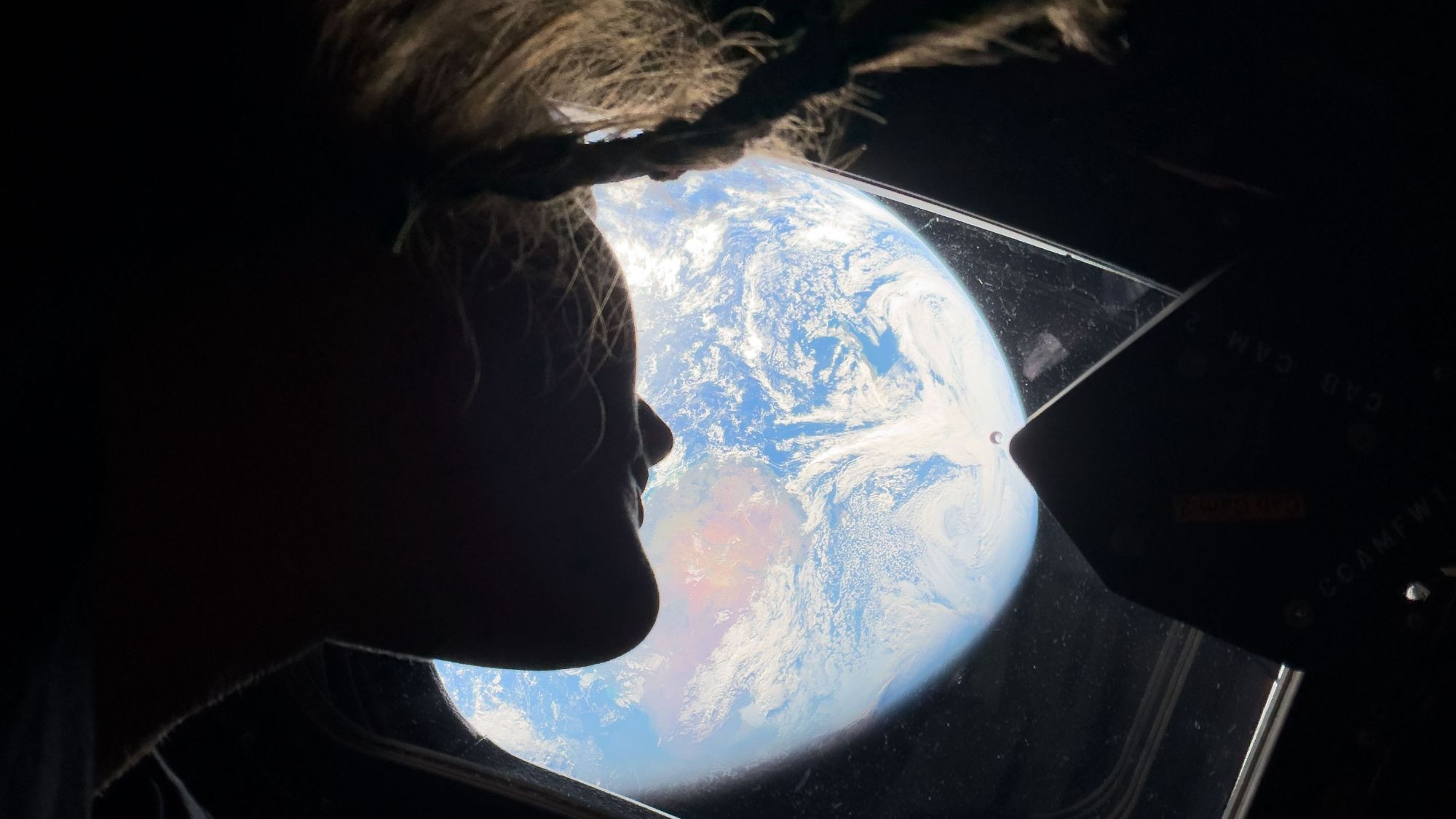
The transition from the weightlessness of space back to the pull of Earth is far from seamless. Following the historic Artemis 2 mission, NASA astronaut Christina Koch recently shared a glimpse into the physical realities of spaceflight recovery, revealing that even a short trip to the Moon can profoundly disrupt the human body’s sense of balance.
The Challenge of Re-entry and Equilibrium
In a recent video shared on Instagram, Koch demonstrated the difficulties of navigating on solid ground. During a blindfold test designed to assess her stability, she struggled to walk in a straight line, wobbling significantly and nearly tipping over.
This physical disorientation is a well-documented side effect of microgravity. In space, the brain learns to ignore the constant sensory signals the body typically uses to determine orientation. Upon returning to Earth, this creates a sensory mismatch similar to the symptoms experienced by individuals with vertigo or concussions.
To cope with the recovery process, Koch utilized humor, joking to her followers: “Guess I’ll be waiting a minute to surf again.”
The Biological Toll of Microgravity
While Koch’s mission lasted only 10 days—significantly shorter than the six-month stints typical of International Space Station (ISS) crews—the biological impact of spaceflight is immediate. Microgravity disrupts several critical bodily functions:
- Proprioception: The body’s ability to sense its own position and movement in space is compromised.
- Spatial Orientation: The fundamental sense of “up” and “down” is distorted.
- Long-term Risks: For longer missions, scientists monitor more severe issues, such as bone density loss (calcium leaching), muscle atrophy, and even subtle changes in gene expression.
To mitigate these effects, astronauts use “countermeasures.” During Artemis 2, the crew employed a regimen of balanced nutrition, supplements, and a compact “flywheel” device for cardiovascular and strength training.
Beyond Physics: The Mental and Social Dimension
Space exploration is as much a psychological challenge as a physical one. Living in isolated, high-stakes environments can take a heavy toll on mental health. This is compounded by the stress of confined living and the distance from loved ones.
The Artemis 2 crew faced unique pressures compared to ISS astronauts. Not only were they the first humans to visit the Moon in over five decades, but they also engaged in unprecedented levels of public transparency, livestreaming much of their activities.
For Koch, a veteran of both Antarctic research stations and long-duration space missions, the psychological weight of the mission was a balance of professional drive and personal longing. Before launch, she noted that while she felt no fear, she felt a deep sense of missing her “humble little life”—a sentiment she expressed through the simple joy of sharing a cup of coffee on a porch with a friend upon her return.
Why This Research Matters
The data gathered from the recovery of the Artemis 2 crew—including Reid Wiseman, Victor Glover, and Jeremy Hansen —is vital. As NASA and its international partners look toward even longer missions, such as those to Mars, understanding how the human body and mind adapt to—and recover from—the vacuum of space is the key to making deep-space exploration sustainable.
The recovery of the Artemis 2 crew provides critical insights into the physiological and psychological hurdles that must be overcome to transform humanity into a multi-planetary species.