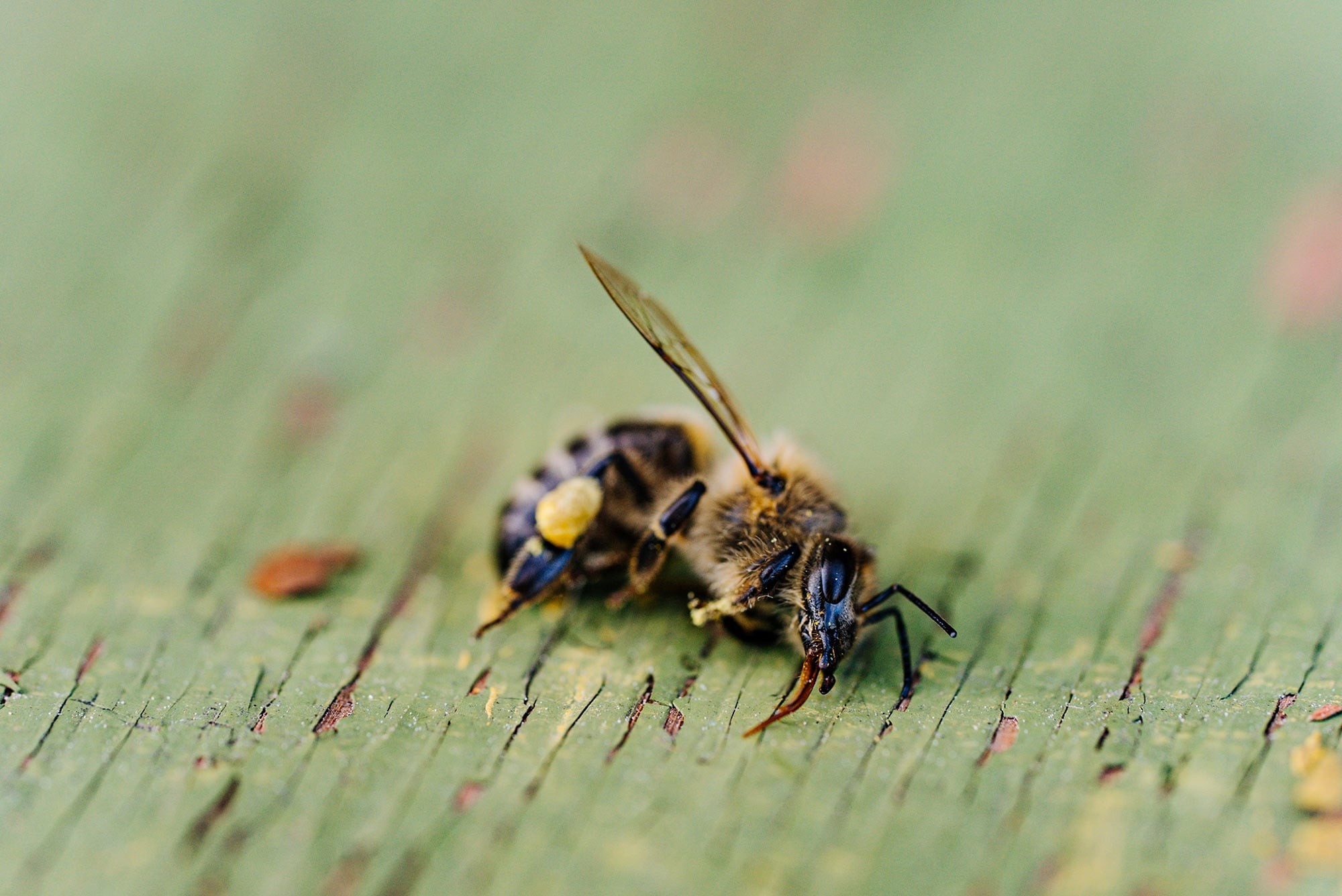
Dead bumblebees. That is what you might be seeing on sidewalks right now.
It is summer. It is hot. And the bees are dropping out of the sky.
You might think this is just nature being harsh, or a weird seasonal glitch. It is not. The bodies piling up on the pavement are the result of a perfect storm. A combination of record-breaking weather and human chemical choices is pushing these vital pollinators to the breaking point.
Why is this happening specifically this year?
June 2026 set a new record as the hottest June on record for England. It was the second hottest summer month in the UK’s history. And we are not done yet. The heat is expected to stick around.
This is not just a warm day. This is a crisis level event for insects that run on temperature.
Thermal Stress Is Lethal
Bumblebees are social creatures. They live in colonies. The workers are the engine, flying around, gathering food, defending the hive. They burn the candle at both ends.
Typically, a worker bee lives only four to six weeks. That is a short, frantic life.
When they get old and weak, they do not die in the nest. The younger bees drag their corpses out to reduce the risk of disease. It is hygiene 101.
But now, you are finding them on the pavement because the heat kills them faster than they can recover.
Extreme heat causes thermal stress. Bees are ectotherms. They rely on their environment to regulate their body heat. When the air gets too hot, their systems overload.
Extended exposure to this kind of heat messes with their development. It threatens the long-term stability of entire colonies. It impairs reproduction. It makes flight difficult. It makes finding food nearly impossible.
Social insects try to fight back. They fan their wings to circulate air. They shuttle heat around their bodies. But there is a limit.
When the mercury spikes, those defenses fail.
Bees might forage longer distances. They might push harder. But if the temperature is too extreme, they simply collapse. Health goes out the window.
Chemicals and Concrete Are Closing In
Weather is one enemy. Another is what humans spray on the land.
Pesticides. Herbicides. The stuff of modern agriculture.
These chemicals are commonplace. They reduce insects that eat crops. The irony? These chemicals harm the insects that help the crops grow.
It is not just about direct poisoning. These chemicals remove the food sources bees need to survive.
Take dandelions. We hate them in our lawns. Bees love them. Dandelions are a massive nectar source. But herbicides kill them off. Pulling them out of your garden reduces the food supply.
If you want to help bees, stop pulling the dandelions.
The EU and UK have banned the most harmful neonicotinoids. Good step. But pesticides are still used.
Insecticides like organophosphates, synthetic pyrethoids, and phenylpyrazoles are still in play. They cause paralysis. They cause death. They disrupt the bees’ ability to navigate.
A bee that cannot navigate cannot find the hive. It cannot find the flower. It starves or freezes.
Then there is habitat loss.
Land is changing. Housing developments. Intensive agriculture. Roads. Concrete.
Where the bees used to live, there is now a parking lot or a monoculture field. Without habitats, populations plummet.
The Timing Problem
Climate change adds a third layer of confusion.
Phenological mismatch. That is the term for when two organisms that depend on each other appear at the wrong times.
Plants flower when bees are not around.
Bees come out of hibernation too early. No nectar to feed on.
Or the flowers bloom too soon. The bees haven’t woken up yet.
Both parties lose out. It is a disaster for the flowers. It is a disaster for the bees.
Food Security Is on the Line
Insects are the most abundant animals on the planet. They are also the most threatened.
We are losing wild bee species at an alarming rate. In 2014, 77 species in Europe were considered at risk of extinction. Today, that number has more than doubled. At least 172 species. That is 10% of all assessed species.
We need them.
Bee decline threatens our food security.
They are decomposers. Pest controllers. Food for other animals.
But their most critical service is pollination.
Bees support an estimated 75% of global crops. Nearly 90% of all flowering plants rely on them.
Without them, we face a global food crisis.
Other animals pollinate. Wind pollinates. But bees do the heavy lifting. And they are vanishing.
What You Can Actually Do
You feel helpless watching bees drop out of the sky. You are not powerless.
There are concrete steps.
First, look at your lawn. Plant native flowering species. Leave some areas unmown. Create safe havens.
Second, be careful with chemicals.
Support local, sustainably produced food. Buy from farmers who use nature-friendly practices you do not necessarily have to buy organic, but think about how the food is grown.
As a homeowner, try non-chemical alternatives first. If you must treat, apply sparingly and responsibly.
Need immediate help for a struggling bee?
You can revive them.
Provide sugary water. Mix two parts sugar to one part water. Put it near the bee. It will often drink and regain strength.
Move it to a shady spot or a flower if it is safe to do so.
Do not touch the bee if you have allergies. Do not risk a sting.
Just offer the sugar water. It is a small act. But in a summer where the heat is relentless and the chemicals are still in use, it is a lifeline.
The bees are struggling. The clock is ticking. The question is, are we going to let them drop?