It was a long voyage. Eight months from Portsmouth to Botany Bay. The prevailing wisdom among historians for decades was simple: the live virus couldn’t survive the trip. Salt air. Heat. Time. It wasn’t impossible, maybe, but it seemed highly unlikely. So, where did the smallpox come from? Theories pointed north. To the Makassar fishermen. To contact with Indigenous Australians in the far reaches of the continent’s tropical coast.
A new study, published July 9 in Nature Human Behaviour, shreds that narrative. The answer isn’t in the north. It’s in the cargo holds of the First Fleet.
The virus arrived with the British colonists. Specifically, it likely came in vials of dried smallpox scab. British medics carried these for inoculations—the dangerous, early precursor to the vaccine Edward Jenner would eventually develop in the 1790s. They weren’t looking for an epidemic. They were trying to prevent one. But the scabs were viable. And they found a population with zero immunity.
The Source of the 1789 Outbreak
The debate over the 1789 outbreak’s origin has long been a stalemate of probability versus possibility. The “Makassar theory” held sway because it offered a clean escape hatch. If the British ships weren’t responsible, the moral burden shifted. It suggested accidental transmission through trade networks along the north coast, far from the settled colony of Sydney Cove.
Alan Williams, an archaeologist at EMM Consulting and co-author of this new study, says the math doesn’t lie. Williams told Live Science that the vials were likely replenished during the fleet’s stopovers. Cape Town? Rio de Janeiro? It doesn’t matter which, only that the journey wasn’t a sterile void. The virus was kept alive, or at least the scabs containing it remained infectious.
“There is very strong evidence that it was the first fleet.”
Matthew Cody Nitschke of Flinders University, another co-author specializing in computer modeling, didn’t mince words. The idea that smallpox drifted in from the north? Gone. The computer models show a stark divergence. If the disease had started in the north, the modeling of its spread to the southeast—where the British landed and where the outbreak hit hardest—would match reality. It doesn’t. The two regions were separated by thousands of miles. Thousands. Of empty, uninhabited desert. Smallpox doesn’t teleport. It doesn’t jump fences.
Why the North Coast Theory Was Wrong
Geography is a cruel master. The new modeling confirms what common sense should have whispered: the transmission routes from the tropical north to Port Jackson are effectively non-existent for a pathogen moving that slowly. The desert is too wide. The population density too sparse in those intermediate zones.
When the First Fleet arrived in January 1788, there were no signs of smallpox in nearby Indigenous communities. James Cook had charted the east coast decades prior, in 1770. He brought back sketches, notes, and plants. He didn’t bring back smallpox. At least, not visibly. But the First Fleet arrived eleven years later. And they brought their medical baggage with them.
The outbreak didn’t just happen. It spread. And it spread with terrifying efficiency through the dense Indigenous settlements around Port Jackson. The computer simulations place the origin point squarely there. Not in a fishing camp up north. Not on a stray vessel from Indonesia. But in the wake of the British ships.
The True Scale of the Tragedy
We have always underestimated the population of Indigenous Australians at the time of contact. The old figure? Roughly 300,000. It sounds high. It sounds like a manageable number for a continent of 7.6 million square kilometers. It’s wrong.
This new study, which refers to a companion paper under review, suggests the population was likely between 2 and 3 million. Some models even push the theoretical pre-contact carrying capacity to 5 million. The discrepancy exists because early 20th-century census data tried to count survivors. After 100 years of disease. After frontier violence. After displacement. The numbers had collapsed. Historians worked backward from that depletion and concluded the population had always been small. It hadn’t.
The 1789 outbreak alone may have killed approximately 220,00 people.
Consider the logistics of that death toll. Spread across communities that had never seen the pockmarked scars of smallpox. The immune system doesn’t just fail; it’s obliterated. The devastation wasn’t just biological. It was cultural. It was structural. The rapid demise of Indigenous cultures in the southeast wasn’t just about land seizure. It was about the sheer inability of a society to function when its members were dropping dead in the streets.
Revising Historical Narratives
The implication here is uncomfortable for a national narrative built on the concept of terra nullius —land belonging to no one. If the land was heavily populated. If the civilization was complex. And if that civilization was decimated by a pathogen inadvertently introduced by the colonizers, then the legal and moral framework of the settlement looks significantly different.
Henry Reynolds, a historian at the University of Tasmania who wasn’t involved in the study, calls the new research a debunking. He notes that the idea of the North Coast origin was always improbable. It was a convenient myth. It allowed historians to treat the outbreak as a natural event, akin to a storm or a flood. An act of God.
But it wasn’t God. It was a British medic’s vial. Or a ship’s store. Or a moment of poor hygiene. Disease theory wasn’t established yet, so the spread was an accident. But accidents have causes. And the cause was the First Fleet.
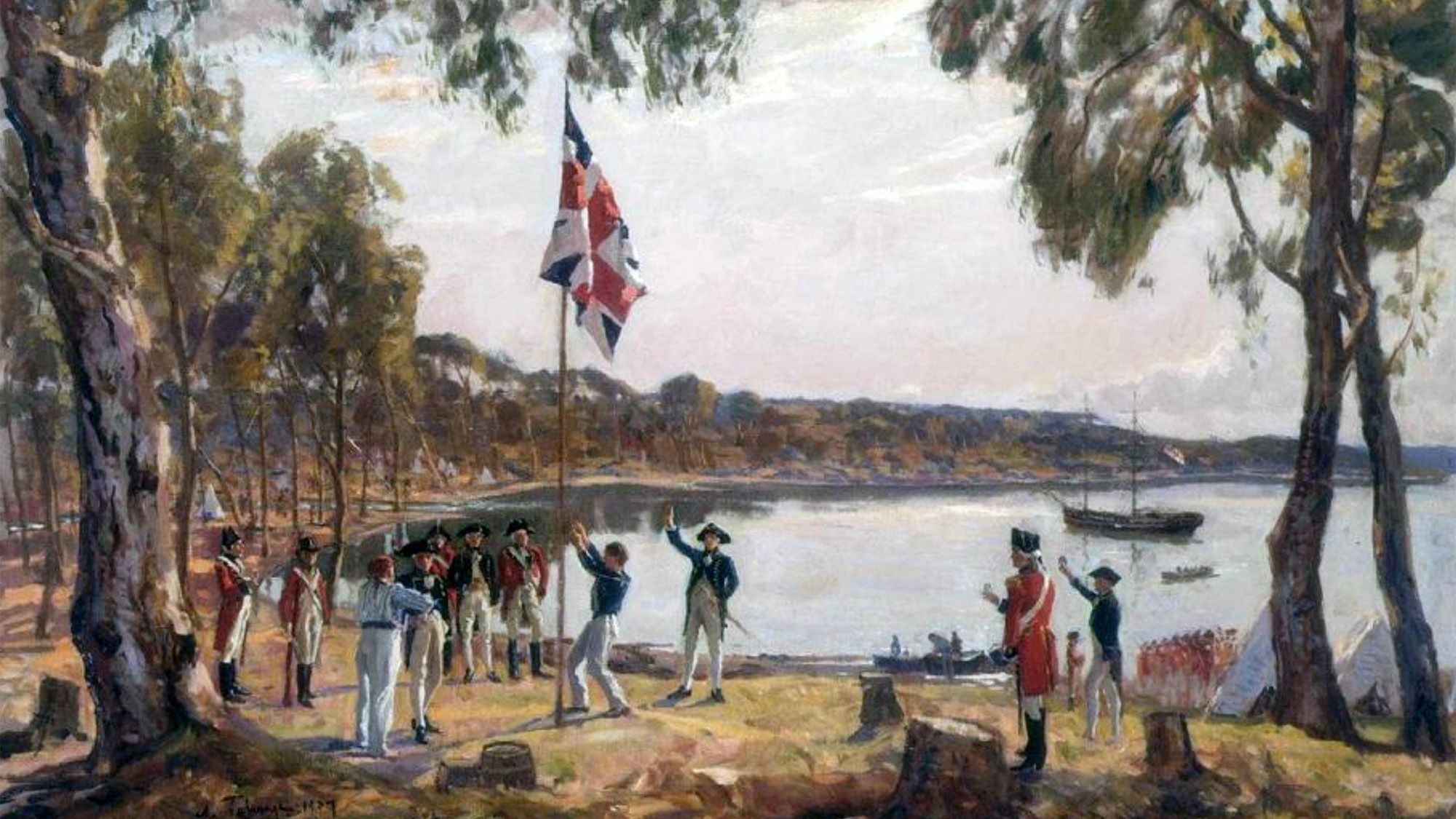
The study rejects the contrary idea. It uses mathematical modeling to show the disease’s impact. It aligns the timeline. It matches the geography. And it points a finger at the very ships that raised the flag in Sydney Cove.
Does it change what we know? Yes. Does it change the tragedy? No. The 220,00 who died are still gone. The communities are still disrupted. But at least the source is now clear. Not the winds from the north. Not the fishermen on the horizon. The source was sitting in the harbor. Waiting. Watching.