May broke records. June beat them. July? Just starting.
Fifty years ago, what we saw in June would have been scientifically absurd. Virtually impossible. Today it is Tuesday. Global warming doesn’t ask permission. It makes heatwaves frequent. Long. Intense.
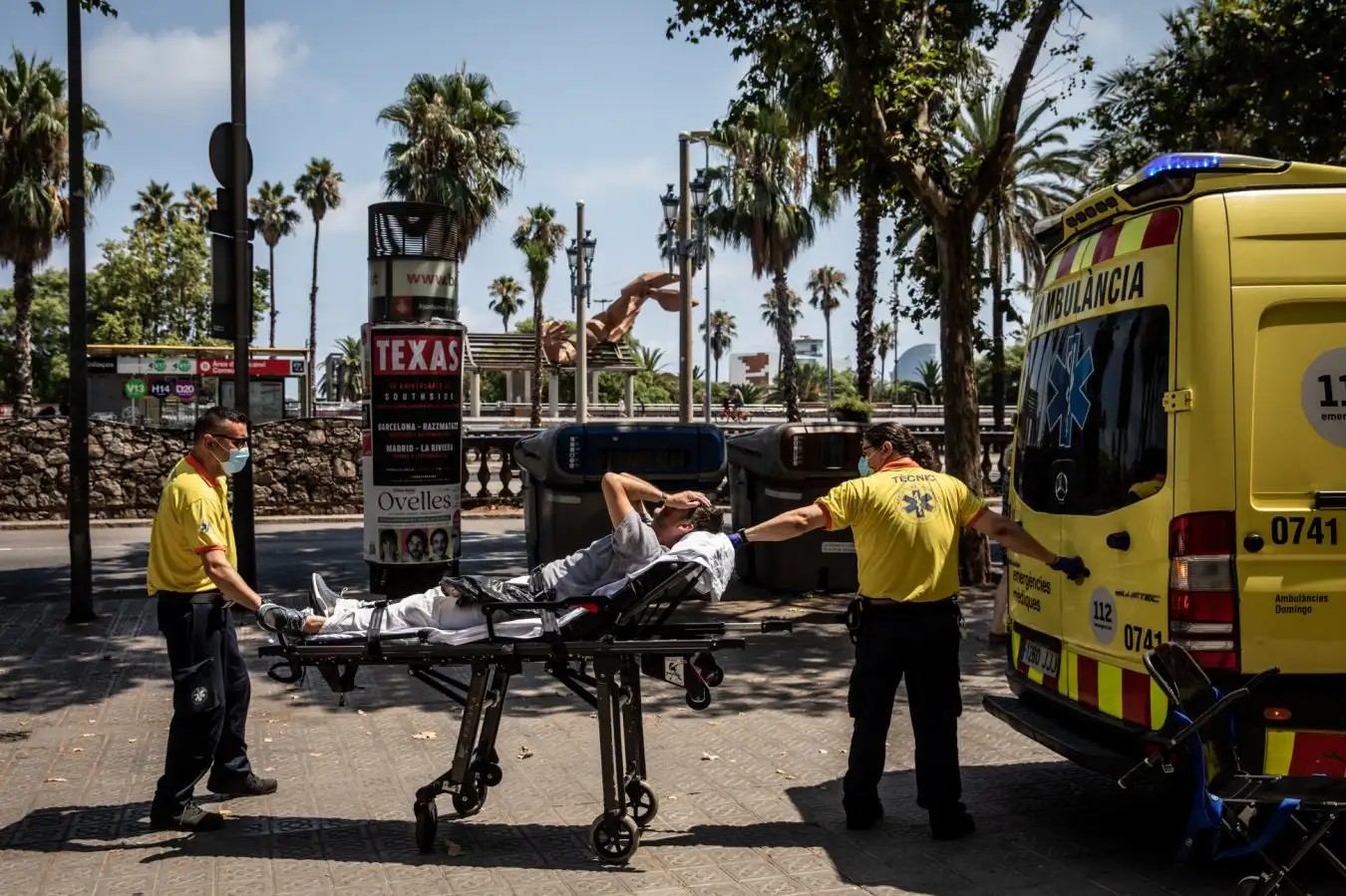
Heat kills. More than half a million people worldwide lose their lives each year to temperature extremes. This is the deadliest weather type on the planet.
You think net zero fixes this tomorrow? No. The CO2 we’ve already pumped into the air is locked in. Temperatures will keep climbing regardless.
“This is just the start,” says Hugh Montgomery at UCL. He isn’t talking about London getting a bit sticky. He says the long-term effects will be savage.
Things are unfolding in a very, very minor way now. Wait—major. Savage.
The clock stretches out
Outside the tropics the season for temperatures above 32 degrees C has grown by 12 days over the last half-century.
In Europe, the fastest warming continent on the map, the heat stress season begins in June on average. It runs until late September.
This year it started in May.
Exposure is up. North America. Europe. South America. Africa. These regions are seeing up to 50 additional days of strong heat stress compared to the 1970 baseline.
Neil Maxwell from the University of Brighton puts it plainly.
If you’ve got heatwaves that last Longer, and then you’ve got more heatwaves, people are going in that raised physiological state far too long.
The body stays stressed. Inflammatory markers spike. The toll compounds.
The nights don’t cool
Before 1998 strong heat stress almost never hit at night.
Now nighttime temps in Western Europe rise at twice the global average rate.
Your body needs a drop in temperature to trigger sleep. The environment stays hot, so you don’t sleep. Or rather you don’t get deep sleep.
Miss a few nights? Reaction times suffer. Anxiety rises.
“If you don’t get cooling periods,” Montgomery warns. “Sustained temperatures without cooling have worse impacts.” In the UK context that means nights under 20 degrees C. We are losing those nights.
2022 was the dress rehearsal
The summer of 2022 gave us apocalyptic imagery. Wildfires in France. Portugal. Spain. The Po river in Italy went dry, exposing wrecked Nazi ships still packed with explosives in the Danube. The UK hit 40 degrees C (104 degrees F) for the very first time in recorded history.
More than 60, 000 dead.
The Mediterranean bore the brunt. Temperatures soared above 40 degrees C in Italy, Greece, and Spain. The demographics made it worse. Older populations have less resilience to heat. They often carry chronic illnesses.
Montgomery again.
You get inflammatory responses from heat… heat exposure itself triggers bad biology that is directly harmful, especially in people with diseases.
Compound misery
The frequency of a hot day followed by a “tropical night” (above 20 degrees C) has jumped 73% in Europe since the seventies.
Scientists call these compound events. The body cannot recover. It cannot cool down. The stress accumulates.
Europe sees more prolonged heat. Africa? Three times more likely to experience hot spells covering three-quarters of the entire year.
Trees aren’t magic bullets
US politicians love tree-planting pledges while pumping more CO2. In cities trees do help. They shade the pavement. They draw moisture from soil which evaporates through leaves, cooling the air. A dense tree canopy can drop neighborhood temperatures by as much as 10 degrees C.
But we are nowhere near enough.
Studies show most cities lack the 30% canopy cover needed to neutralize urban heat islands. Look at Paris. Look at London. More than 90% of their buildings fail to meet that threshold.
We plant saplings. We need forests.
A bleak outlook?
There is no sugar-coating. The crisis is immediate. Leading scientists like Nathalie Seddon, Kevin Anderson, and Paul Behrens argue the emergency briefing is over.
We are living the briefing.
So do you grab a fan? Or do you just accept the new normal?
The graphs don’t lie. But maybe they don’t tell the whole story either.