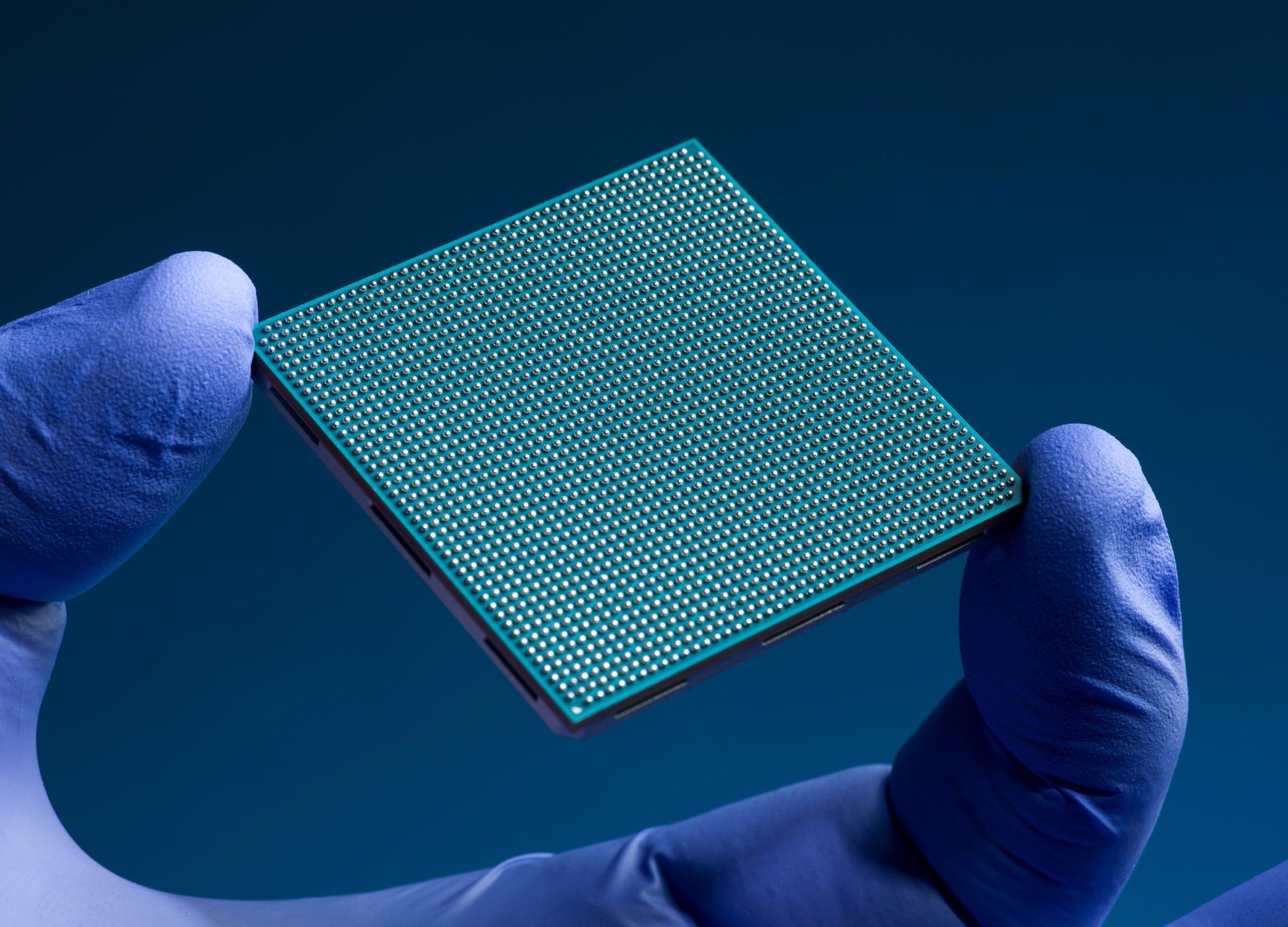
Forget the slow, clunky computers we’ve been sending to space for decades. NASA has something faster. 500 times faster.
This isn’t a leak from a sci-fi script. It’s real. A new processor is in development, one that might finally give spacecraft the independence they’ve needed since we left Low Earth Orbit.
Old Chips Don’t Cut It
We use old chips in space right now. Not because we love the aesthetic of the 1970s but because they work. They’re rugged. They don’t freak out when hit with radiation. But they are sluggish.
For deep space missions, that slowness is a liability.
You can’t talk to a rover on Mars in real time. The distance kills it. If the car sees a rock it can’t handle, it’s stuck. Waiting for Earth’s command means waiting hours. That’s too long for a critical moment.
The new goal is autonomy. Spacecraft need to think on their own feet.
Eugene Schwanbeck from NASA’s Langley Research Center puts it bluntly:
Building on the legacy of previous space processors this new multicore system is fault tolerant flexible and extremely high performing
That’s the pitch. A brain that doesn’t just calculate. It decides.
The Torture Tests
A chip that sits in a pocket of your phone has no business in space. Space hates electronics. High energy particles from the Sun crash into circuits causing errors. Sometimes the whole craft shuts down going into a safe mode just to survive.
This new chip has to take a beating without blinking.
Engineers at NASA’s Jet Proplusion Laboratory are putting it through the wringer. Radiation. Thermal shocks. Vibrations that would shake the filling out of a molar.
Jim Butler who runs the project calls it rigorous.
We are putting these new chips through the wrapper by carrying out radiation thermal and shock tests
It started in February. It’ll go on for months. But early results look good. Like really good. We’re talking roughly 500 times more power than what we fly today.
To celebrate the start of this? An email with the subject line Hello Universe. A nod to the first programmers who ever looked up from a terminal. A bit nostalgic. Maybe necessary.
Tiny Box Giant Power
It’s called a system-on-a-chip or SoC. Sounds technical. Isn’t much. It just means everything vital sits on one little slab of silicon. CPUs memory interfaces networking gear all packed into something smaller than your hand.
We have these in our pockets right now. Our phones have them.
But those phones wouldn’t last a day in orbit. This version? Hardened. Built for billions of miles of loneliness. No repair crew is coming. No warranty returns.
Microchip Technology partnered with NASA for this. They paid for their own R&D. It’s a commercial deal not just government funding. And Microchip is already sharing early versions with the defense sector and commercial aerospace players.
Why It Matters
So what do you do with 500 times the compute power?
First. You let AI handle the unexpected. If a lander hits a boulder the new system adjusts in milliseconds. No waiting for Houston.
Second. You analyze science data faster. Store less noise. Transmit only what matters back to Earth. Bandwidth in deep space is precious. This chip treats it that way.
Finally. It helps astronauts. If we go back to the Moon or to Mars the ship needs to manage life support power navigation with zero lag. Humans make mistakes when tired. Computers don’t. At least not usually.
The plan is broad. Earth orbiters. Planetary rovers. Habitation modules for humans. Microchip even wants to sell versions back on Earth for cars and planes.
Which makes sense. If it can survive space it can survive a crash test.
The testing isn’t done. Months of agony left before flight certification. But the trajectory is clear.
We are sending smarter machines to the dark. And that changes everything. Or nothing at all until it happens. Then it will be too late to be surprised.