We think we are finished evolving.
Wrong.
Selection pressures are relentless, whether nature forces them on us or we bring them on ourselves with our own habits. Now, new data suggests that people living high in the cold Andes are still changing, shaped by a very humble ingredient.
The potato.
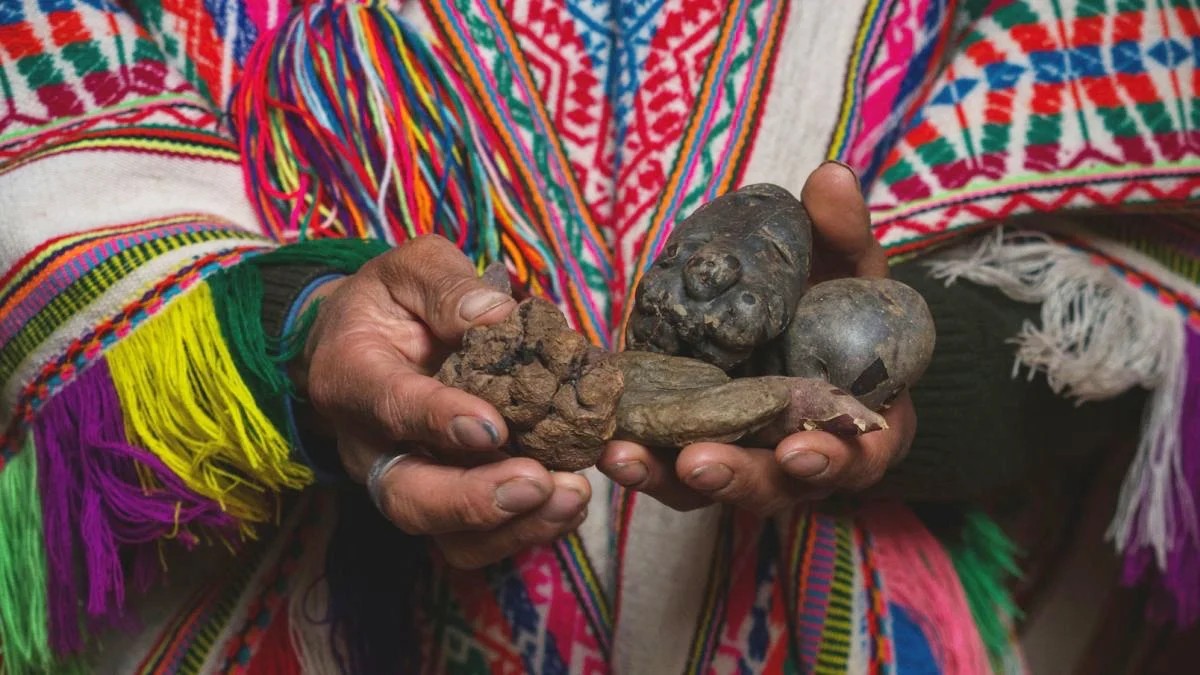
It’s everywhere now, but these communities domesticated it thousands of years ago. That history might be the reason their bodies have quietly rewritten themselves to handle starch better than almost anyone else.
A Question of Copies
“The high-altitude Andes are a treasure trove for studying adaptation,” says anthropologist Abigail Bigham from UCLA. She is talking about oxygen shortage usually, how tissues starve for air. “This shows diet can do the same work.”
Evolution is time plus pressure. Bodies break under extreme heat, zero oxygen, radiation. But softer pressures work too, like the food you eat every day for centuries.
A few years ago, Bigham’s team noticed that Indigenous Peruvians had genetic tricks for digesting starch that recent adopters of potatoes didn’t.
They expanded the search. They looked at genomes from across the globe. The Quechua people, with deep Andean roots, stand out.
Really stand out.
The AMY1 Advantage
Most people have the AMY1 gene. It makes amylase in your saliva. The stuff that starts breaking down carbs right in your mouth.
Usually, humans have two to twenty copies of this gene per cell. The global average is seven.
The team scanned 3,723 genomes from 85 groups. The Quechua from Peru? Ten copies on average.
Not a huge jump. But enough.
“It gives a 1.2 percent survival edge per generation,” the study estimates.
That sounds small.
Until you multiply it over generations.
Sculpting the Genome
Biologist Omer Gokcumen from the University at Buffalo calls it a rare moment of clarity. “We suspected diet shaped genes, but proof like this is rare.”
Here is how it likely worked.
Potatoes arrived on the scene, roughly 10,006,00 years ago. People with few copies of the AMY1 gene struggled to digest the new staple. Maybe they got sick. Maybe they had fewer children who survived. Those with many copies? They thrived. They reproduced. The others faded.
Gokcumen puts it nicely.
Evolution is chiseling a sculpture,
not constructing a building.
They didn’t build new copies overnight. The weak spots were just chipped away until only the starch-tolerant remained.
Meanwhile, populations descended from the Maya lack this adaptation. No long history with potatoes there. No selection pressure. Just different outcomes.
What Next?
The timeline fits the food perfectly. The gene was around before farming, but its frequency spiked when the Andeans started growing spuds in earnest.
It challenges the “paleo diet” debate. Adapting to food takes time, but it is fast in geological terms. And maybe tech isn’t the only thing driving our evolution.
Food is powerful too.
“Everyone used to eat local,” says evolutionary geneticist Kendra Scheeru. “Now we import everything. If you had to walk across the globe to change what you ate, things moved slow. Now? We eat global cuisine daily.”
She poses the question.
What happens now that the whole planet is eating French fries?