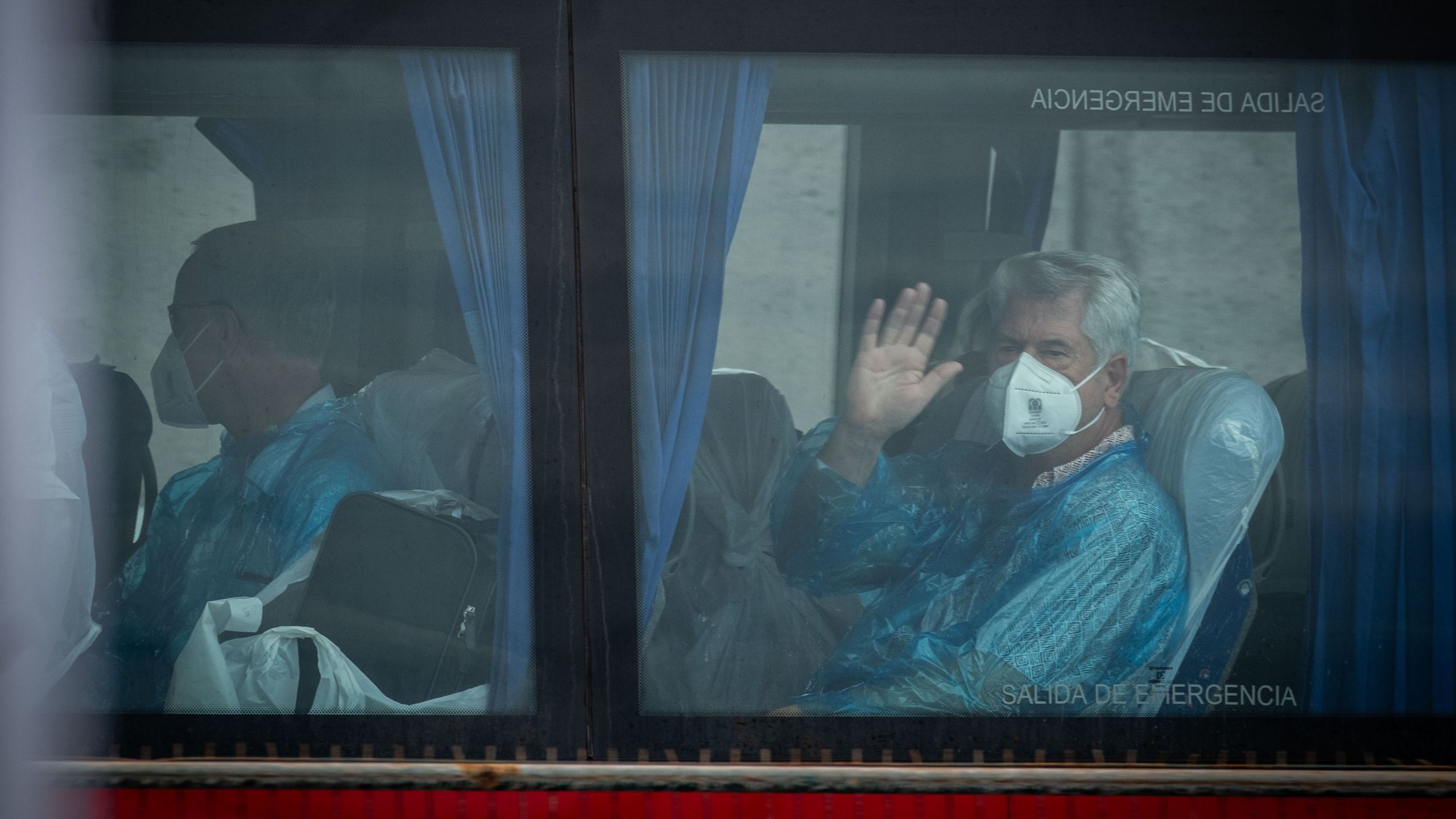
Fifteen people are locked in quarantine. Up to six weeks of it. This is the immediate reality for passengers on the MV Hondius following the hantavirus outbreak. Health authorities are playing it safe. They’re monitoring everyone based on a long incubation period.
The virus in question is Andes hantavirus. It’s unique. Among its kind, it is the only one known to spread from person to person. But that spread is rare. It requires “close and prolonged contact.”
So. What does that actually mean?
Nobody really agrees. Some agencies are just copying pandemic-era definitions from COVID-19 rules. The U.S. CDC suggests six feet for fifteen minutes in an enclosed space. A strict metric. But Andes virus is nothing like SARS-CoV-2. It is far less contagious.
High-risk contacts? Think intimate partners. Household members. People with prolonged indoor exposure.
That’s the World Health Organization’s take. Broader. Vaguer.
Healthcare providers are told to wear PPE. Masks. Good ones. Dr. Dean Blumberg from UC Davis says to err on the side of caution. Use N95 respirators. Assume airborne transmission is possible. Airborne diseases float in the air for others to breathe in. Think tuberculosis or measles.
With Andes, we know it enters through tiny particles of rat waste or urine disturbed in the air. We know people caught it by eating near an infected person indoors. Does that prove air spread? Maybe. But “possible” isn’t “common.”
Juan Diego Pinotti points out the obvious. The virus has been in Argentina for decades. Outbreaks are contained. Blumberg adds that person-to-person events are rare. Handfuls, not plagues. If it were truly dangerous in everyday settings, Argentina would be facing a different reality.
The evidence lies in Epuyén. A town in Patagonia. Late 2018. A man with a fever attends a birthday party. About one hundred guests show up. Only five people sitting near him get sick. That chain reaction ends with 34 cases and 11 deaths.
Three patients were identified as “superspreaders.” They caused more than half the cases. Why? Their livers were damaged. Viral loads were higher. Transmission peaked when patients first developed fever.
Yet, look at who didn’t get sick. 94 party guests stayed healthy. 82 healthcare workers cared for the infected without masks and never caught the virus.
Another woman brought the virus to Delaware in 2018 after getting sick in Argentina. More than 50 people were watched. None got infected.
Keeping the definition of “close contact” vague might be the right call. Blumberg suggests timing and distance vary. It depends on how sick the carrier is.
Then you have the environment. Cruise ships concentrate people. They force close contact where none would happen normally. That’s likely why the MV Hondius became an epicenter.
Risk increases for every infection in those tight spaces. Even ones that don’t transmit easily. Was it the virus? Or just the ship? Probably both.
It leaves us with a messy conclusion. We define “close” by fear rather than fact.